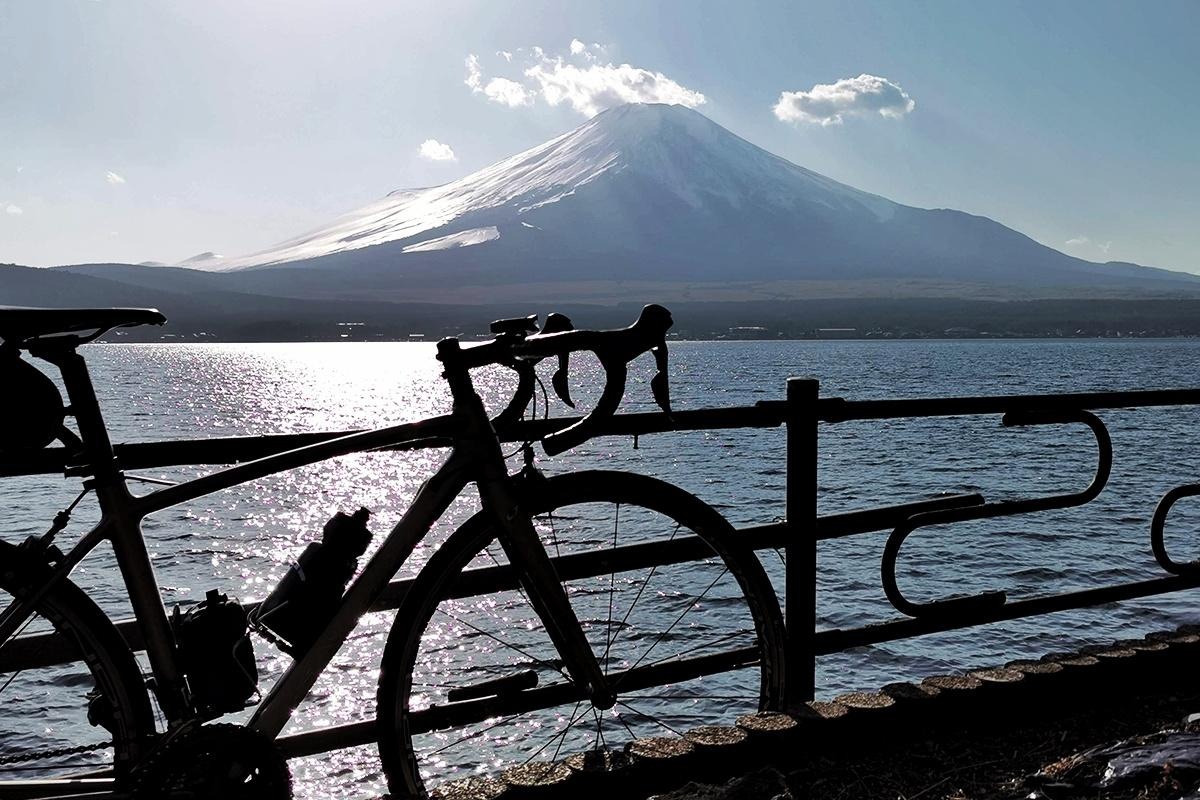
Can You Ride a Bicycle on the Sidewalk in Japan? Understanding Japan’s Unique “Sidewalk Cycling” Culture and Rules

One of the first things many visitors to Japan notice is that bicycles often share the sidewalk with pedestrians.In most Western countries, especially across Europe and North America, cyclists are expected to use bike lanes or ride on the road. Yet in Japan, you’ll often see locals casually pedaling along the sidewalk — and yes, it’s actually allowed under certain conditions.
Let’s take a closer look at the background and the specific rules that shape Japan’s unique cycling culture.
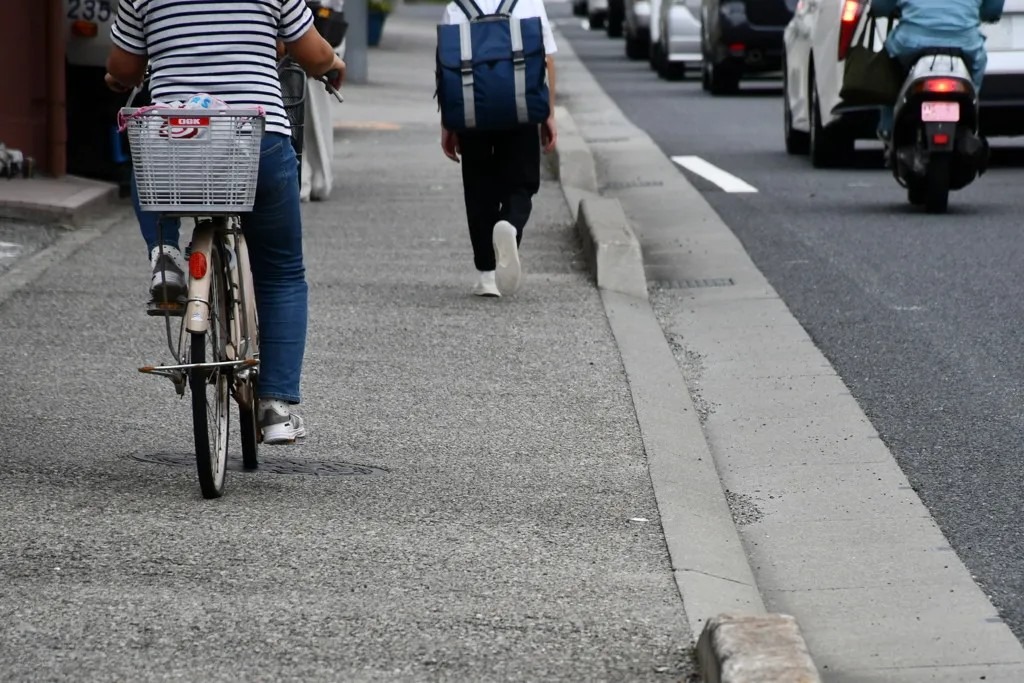
Why Do Cyclists Ride on the Sidewalk in Japan?
Back in the 1970s, Japan experienced a rapid increase in car ownership, and traffic accidents involving bicycles and cars became a serious problem.
To protect cyclists, the government began allowing bicycle use on sidewalks, especially in busy urban areas.
Today, bicycles in Japan are legally classified as “light vehicles”, and under the Road Traffic Act, the default rule is that cyclists should ride on the roadway. However, there are some important exceptions:
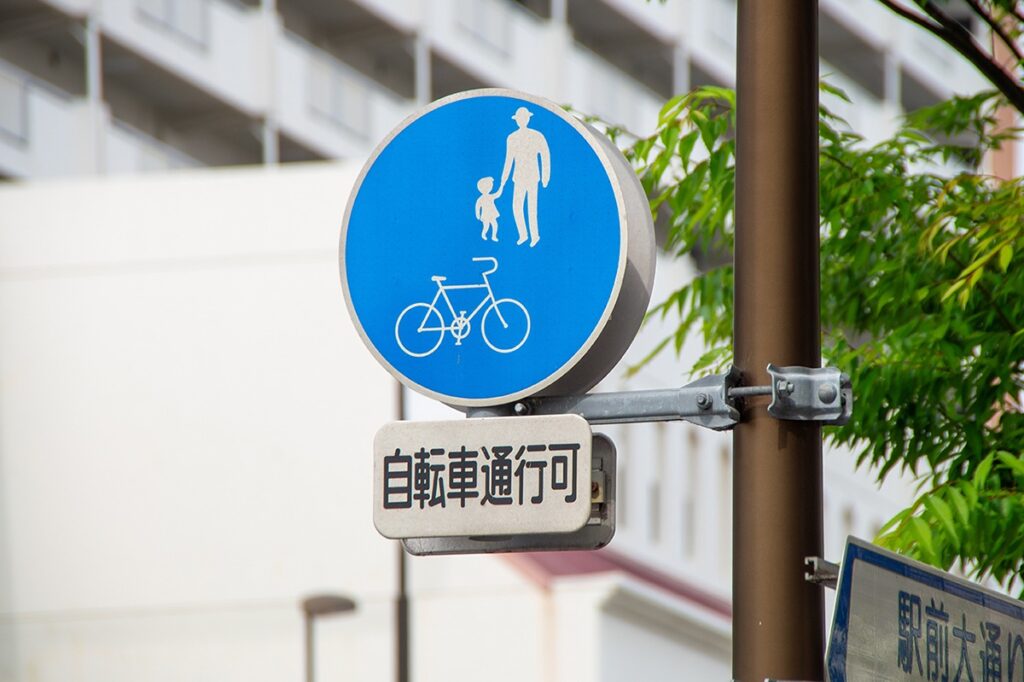
- When a blue road sign indicates that bicycles are allowed on the sidewalk (“Jitensha tsuukou ka” / 自転車通行可).
- When the rider is a child under 13, a senior over 70, or someone with physical disabilities.
- When traffic conditions on the road are too dangerous — for example, heavy traffic, road construction, or parked vehicles blocking the left side.
Even when these conditions are met, cyclists must still follow key safety rules:
- Pedestrians always have priority.
- Ride slowly — at a speed where you can stop immediately if needed.
- Stay near the road side of the sidewalk, not the building side.
- Yield or stop if you might obstruct pedestrians.
- When passing others, keep to the left and proceed cautiously.
These practices have created Japan’s distinctive — and sometimes confusing — “sidewalk cycling culture.”
How to Ride Safely in Japan
If you’re cycling in Japan for the first time, keep the following tips in mind:
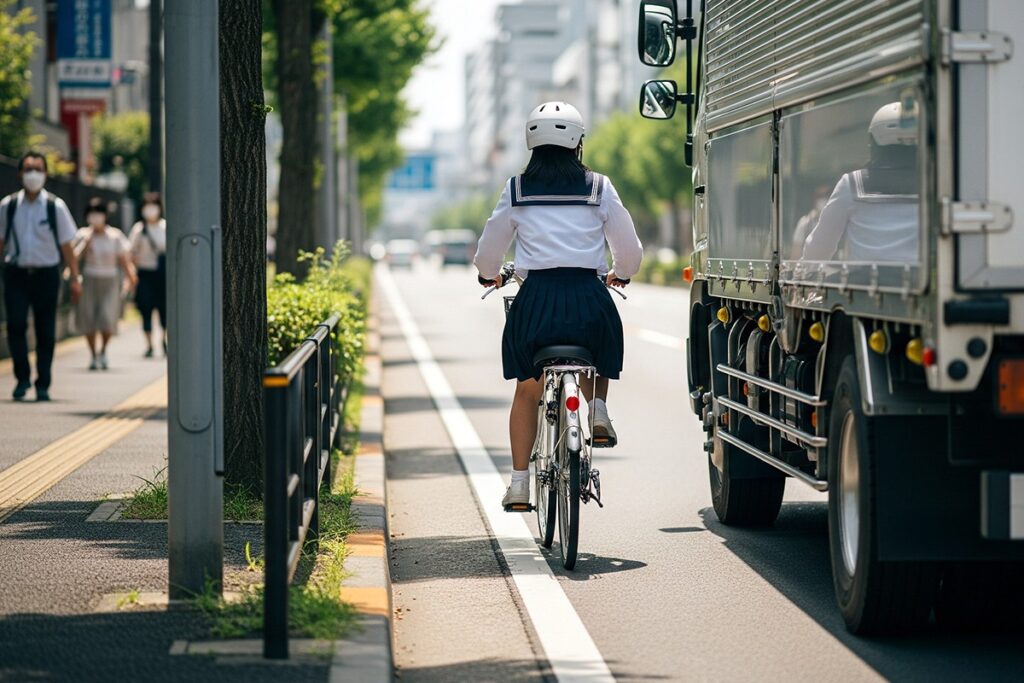
①Stick to the Road When Possible
Japan drives on the left, so cyclists should ride on the left side of the road. Riding side by side is prohibited unless otherwise indicated.
②Look for Blue Signs
A blue circular sign showing a bicycle and a pedestrian means the sidewalk is shared. You may ride there, but always remember: pedestrians come first.
③In Tourist Areas, Be Flexible
In busy sightseeing spots such as Kyoto, Asakusa (Tokyo), or Nara, it’s common for rental bikes to use sidewalks. However, when the crowds thicken, it’s safest to dismount and walk your bike (“oshi-aruki” in Japanese).
Beyond Roads and Sidewalks: Dedicated Cycling Routes
In recent years, many regions have been developing exclusive cycling paths as part of Japan’s growing cycle tourism movement.Famous examples include the Shimanami Kaido (linking Honshu and Shikoku) and Lake Biwa’s cycling route in Shiga Prefecture — both offering well-marked, scenic, and safe paths for long-distance riders.
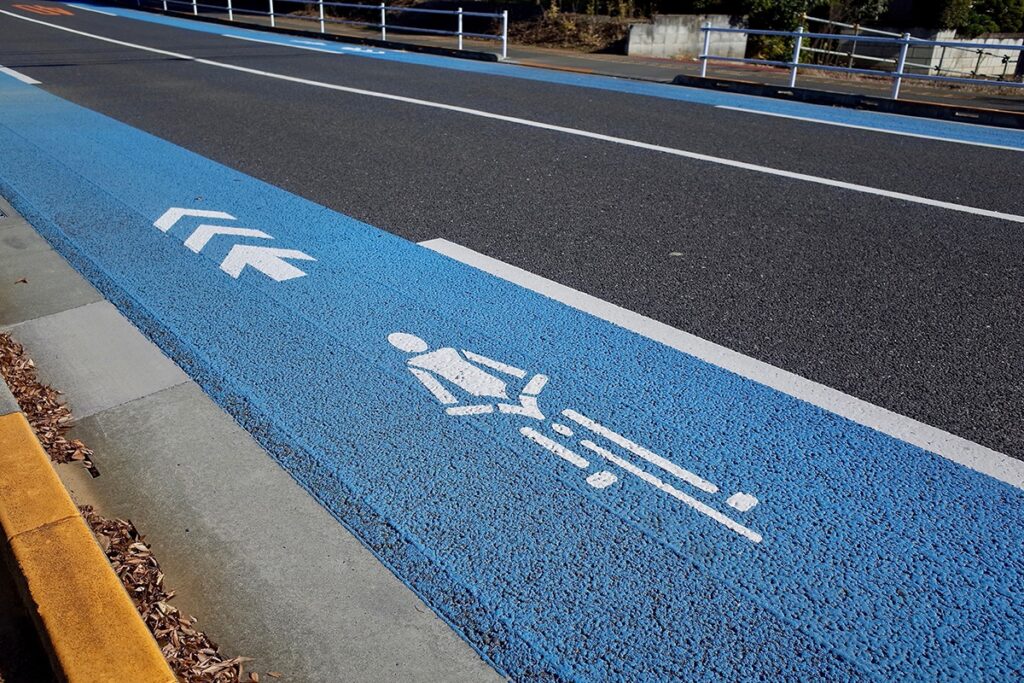
These efforts reflect Japan’s balance between safety, practicality, and its long-standing coexistence of bicycles, cars, and pedestrians — a system that may look surprising, but works uniquely well in Japan.
- HOME
- Rules & Etiquette for Cyclists in Japan
- Can You Ride a Bicycle on the Sidewalk in Japan? Understanding Japan’s Unique “Sidewalk Cycling” Culture and Rules