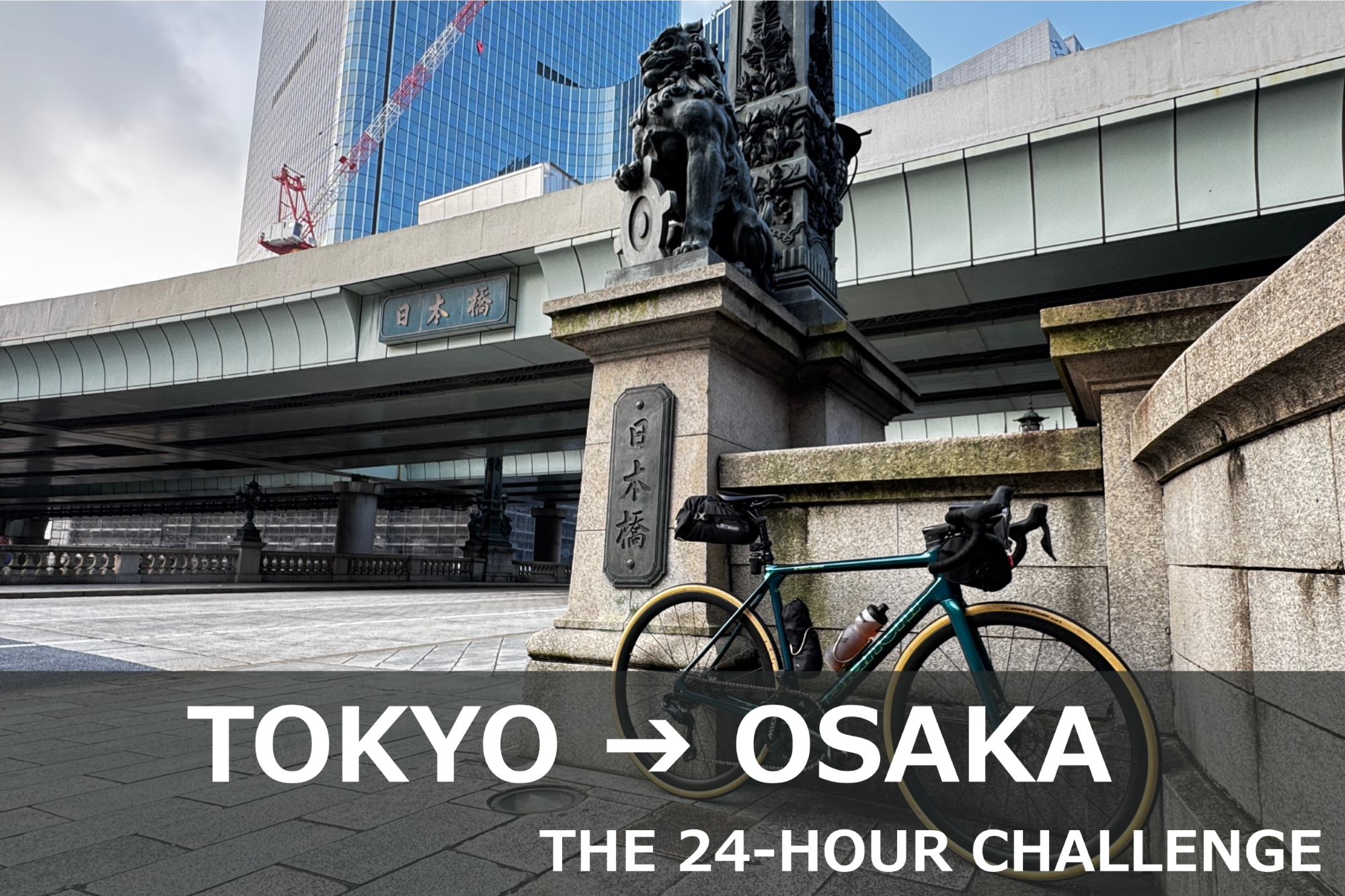
Cycling the Historic Tōkaidō: From Shizuoka to Osaka A Practical Guide Through Central Japan
The Western Half of the Journey
If Part 1 was about understanding the Tōkaidō, Part 2 is about riding it efficiently and safely. From Shizuoka to Osaka, the route becomes longer, quieter in places, and culturally deeper. This section passes through Aichi and Mie prefectures, offering historic post towns, industrial cities, and rural coastal landscapes.
For many foreign cyclists, this half feels more “Japanese” in the traditional sense—less metropolitan, more local.
- The Western Half of the Journey
- Shizuoka to Aichi: Distance and Rhythm
- Aichi Prefecture: Industry Meets History
- Mie Prefecture: Cultural Rewards
- Entering Kansai: Approaching Osaka
- Accommodation, Food, and Services
- Safety and Cultural Etiquette
- Final Thoughts: Is the Tōkaidō Worth It?
- Complete 2-Part Guide Summary
Shizuoka to Aichi: Distance and Rhythm
This section is characterized by:
- Long flat stretches
- Strong coastal winds
- Wide rivers such as the Tenryu River
While elevation gain is moderate, distances can feel long due to fewer major landmarks.
Key advice:
- Monitor wind direction
- Plan food stops carefully
- Expect fewer English-friendly services
Aichi Prefecture: Industry Meets History
Aichi is home to major cities such as Toyohashi and Nagoya.
Cycling realities here include:
- Urban traffic
- Industrial zones
- Limited scenic routes
However, this area is essential for understanding modern Japan.
Do not expect continuous beauty—this is about endurance and perspective.
Mie Prefecture: Cultural Rewards
Once you enter Mie, the atmosphere changes dramatically.
Highlights include:
- Historic post towns like Kameyama
- Quiet rural roads
- Traditional local cuisine
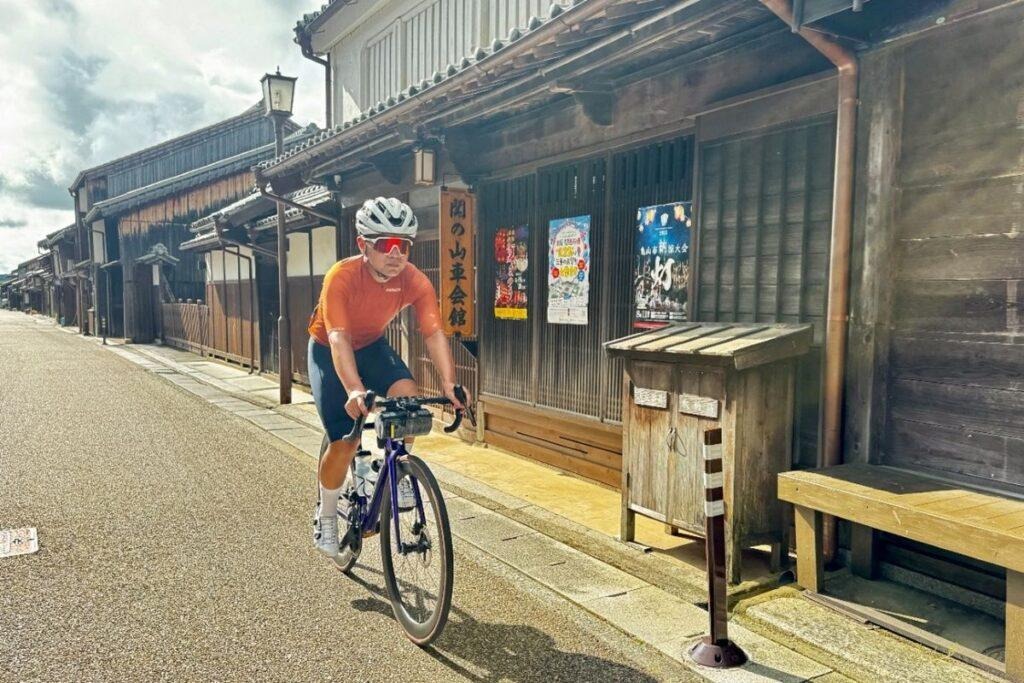
This is one of the most rewarding regions for cyclists who appreciate slower travel.
Entering Kansai: Approaching Osaka
As you near Osaka:
- Traffic density increases
- Roads become more complex
- Navigation requires extra attention
Ending points vary:
- Osaka (Koraibashi area)
- Kyoto (historical endpoint for some riders)

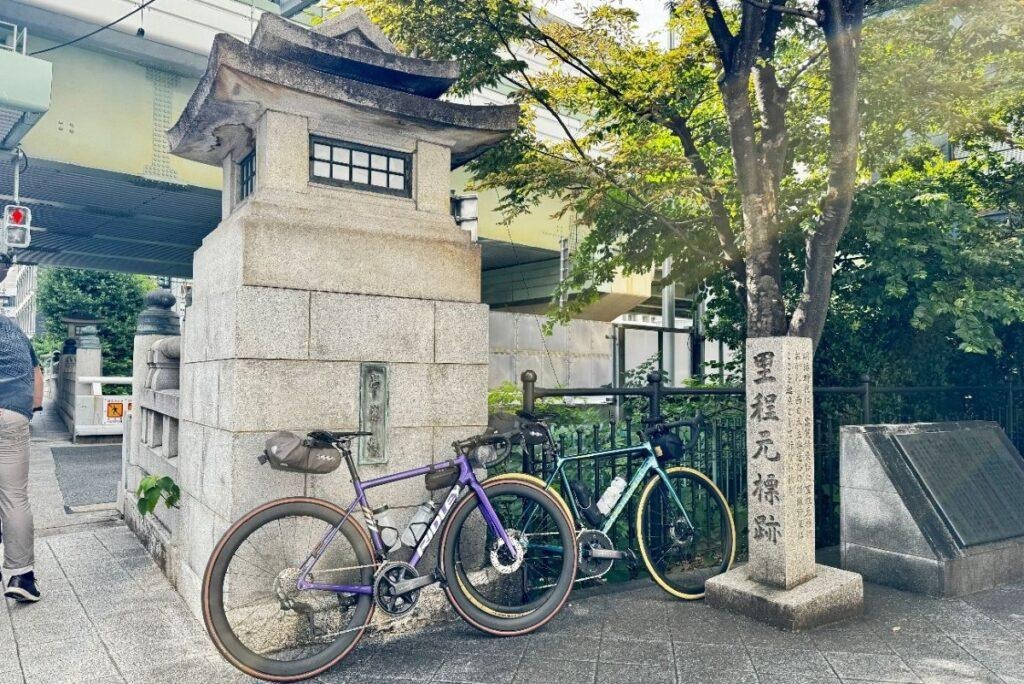
Reaching the end of the Tōkaidō is deeply satisfying, both physically and emotionally.
Accommodation, Food, and Services
Practical considerations for this section:
- Business hotels are the most bike-friendly option
- Convenience stores are reliable but spaced farther apart
- Coin laundries are common and useful
Always confirm bike storage policies in advance.
Safety and Cultural Etiquette
Important points for foreign cyclists:
- Cyclists must follow traffic laws strictly
- Helmets are recommended (mandatory for children)
- Avoid riding on sidewalks unless explicitly allowed
- Be polite and predictable in traffic
Japanese drivers are generally respectful, but caution is essential.
Final Thoughts: Is the Tōkaidō Worth It?
Cycling the Tōkaidō is not about chasing speed or scenic perfection. It is about context, continuity, and connection. You ride the same corridor that shaped Japan’s history, adapting it to modern cycling travel.
For foreign cyclists seeking a deeper understanding of Japan beyond tourist hotspots, the Tōkaidō offers an unforgettable experience.
Complete 2-Part Guide Summary
- Part 1: Understanding the route, preparation, Tokyo to Shizuoka
- Part 2: Practical riding guide, Shizuoka to Osaka
Together, these articles form a comprehensive introduction to one of Japan’s most meaningful long-distance cycling journeys.
- HOME
- Japan Cycling Routes / Areas
- Cycling the Historic Tōkaidō: From Shizuoka to Osaka A Practical Guide Through Central Japan
- HOME
- Popular Cycling Routes in Japan
- Cycling the Historic Tōkaidō: From Shizuoka to Osaka A Practical Guide Through Central Japan
- HOME
- Cycling Routes
- Cycling the Historic Tōkaidō: From Shizuoka to Osaka A Practical Guide Through Central Japan