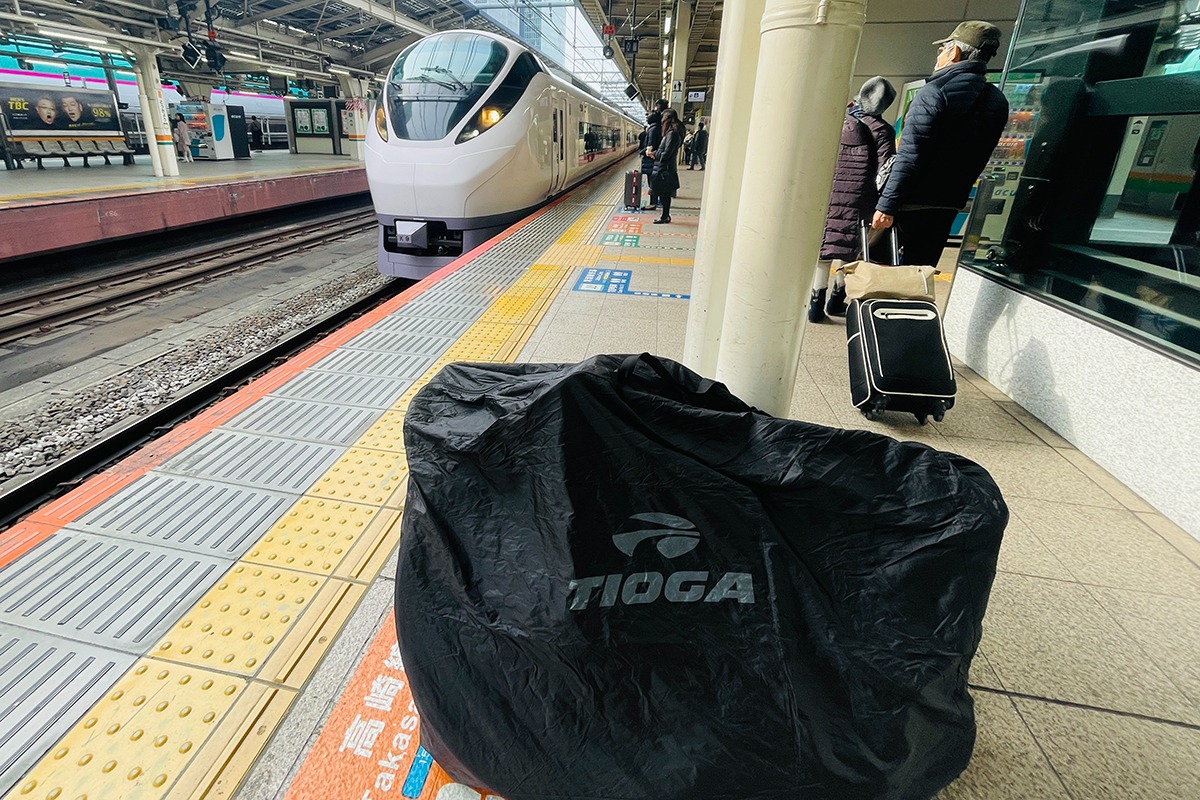
Kasumigaura Mini Loop,A Flat, Scenic 100km Ride on One of Japan’s Best National Cycle Routes

When cyclists talk about riding in Japan, steep mountain passes and legendary climbs often come to mind. But Japan also offers something far rarer: a long-distance cycling route that is flat, scenic, safe, and exceptionally well supported.
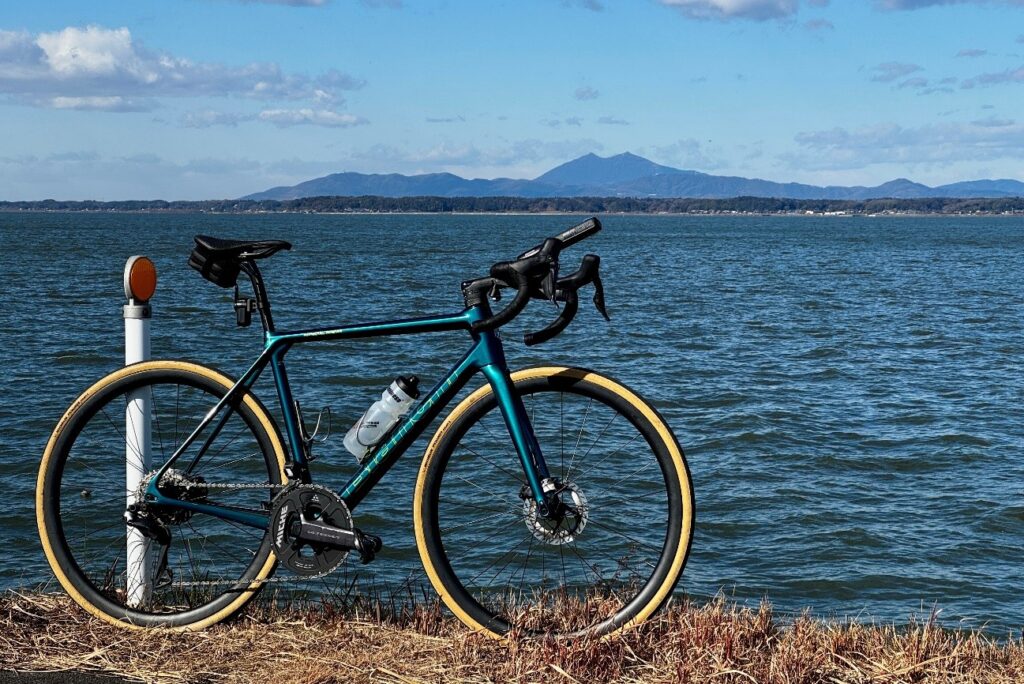
The Kasumigaura Loop, commonly known as “Kasu-ichi”, circles Japan’s second-largest lake. While the full loop is about 125km, there is a more approachable option—the Kasumigaura Mini Loop, a ride of roughly 95–100km.
For many riders, especially those visiting Japan or riding here for the first time, this “mini” version is not a compromise—it is the perfect introduction.
- Why Kasumigaura Is Special for International Cyclists
- What Is a “National Cycle Route” in Japan?
- Easy Access from Tokyo: Start at Tsuchiura Station
- RinRin Port Tsuchiura: A Cyclist’s Gateway to the Lake
- Riding the Kasumigaura Mini Loop
- Road Conditions and Safety
- Local Food Stop: Roadside Station Tamatsukuri
- Choosing the Mini Loop: Crossing Kasumigaura Bridge
- Wind: Kasumigaura’s Final Challenge
- Is Kasumigaura Mini Loop Right for You?
- A Perfect First “Loop” in Japan
Why Kasumigaura Is Special for International Cyclists
Kasumigaura is officially designated as a National Cycle Route, a status given by the Japanese government to routes that meet high standards for safety, accessibility, scenery, and cycling infrastructure.
For international riders, this means:
- Clear route signage and road markings
- Frequent restrooms and rest areas
- Good road surfaces suitable for road bikes
- Easy access by train from major cities
- Cycling-friendly facilities at key hubs
In short, Kasumigaura is one of the safest and easiest places to experience long-distance cycling in Japan.
What Is a “National Cycle Route” in Japan?
Japan’s National Cycle Route program was launched to promote cycle tourism and make cycling more accessible to both domestic and international riders.
Routes are selected based on criteria such as:
- Continuous and navigable cycling paths
- Connections to public transportation
- Availability of food, accommodation, and services
- Cultural and scenic value along the route
Kasumigaura was one of the first routes to receive this designation, and it shows. Even for riders unfamiliar with Japanese roads, the experience feels intuitive and reassuring.
Easy Access from Tokyo: Start at Tsuchiura Station
One of Kasumigaura’s biggest advantages is how easy it is to reach.
From Tokyo Station, it takes about one hour by JR train to reach Tsuchiura Station. No car is required.
What truly sets Tsuchiura apart is how clearly it is designed for cyclists.
From the moment you step onto the platform, dedicated cycling routes guide you:
- From the train platform
- Through the ticket gates
- Into the station building
- And directly toward the lake
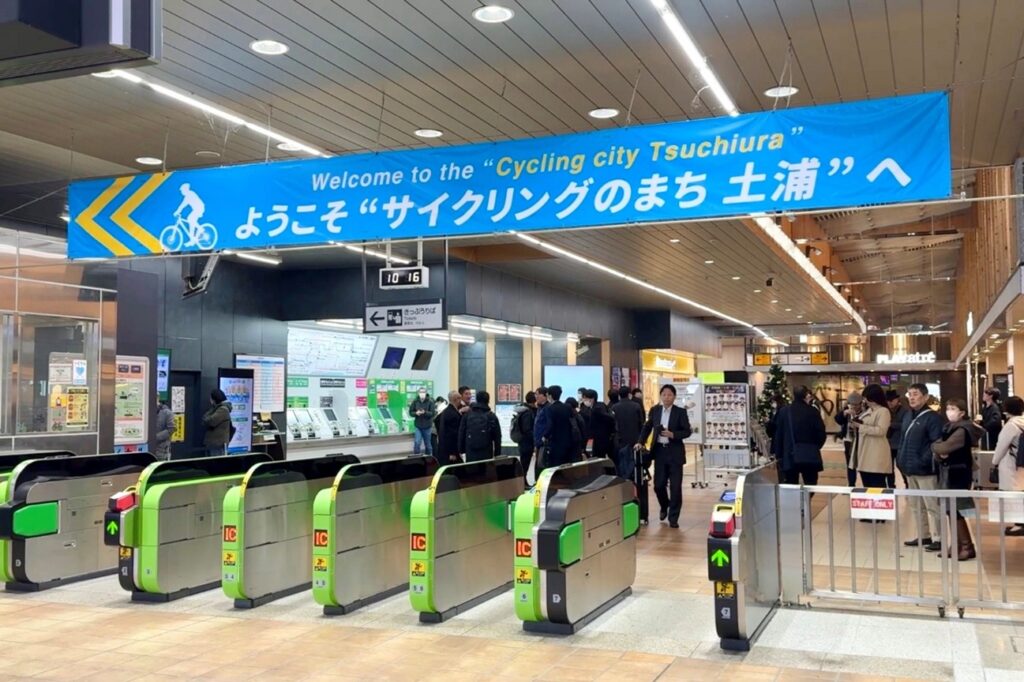
Inside the station, cyclists will find:
- A dedicated space to unpack bikes
- Free, lockable changing rooms
- Coin lockers
- Shower facilities
- A cycle shop and rental bikes
Having cycled across many regions of Japan, this is one of the most cyclist-friendly stations in the entire country.

RinRin Port Tsuchiura: A Cyclist’s Gateway to the Lake
Before setting off, many riders stop at RinRin Port Tsuchiura, located right next to the lake and directly on the cycling route.
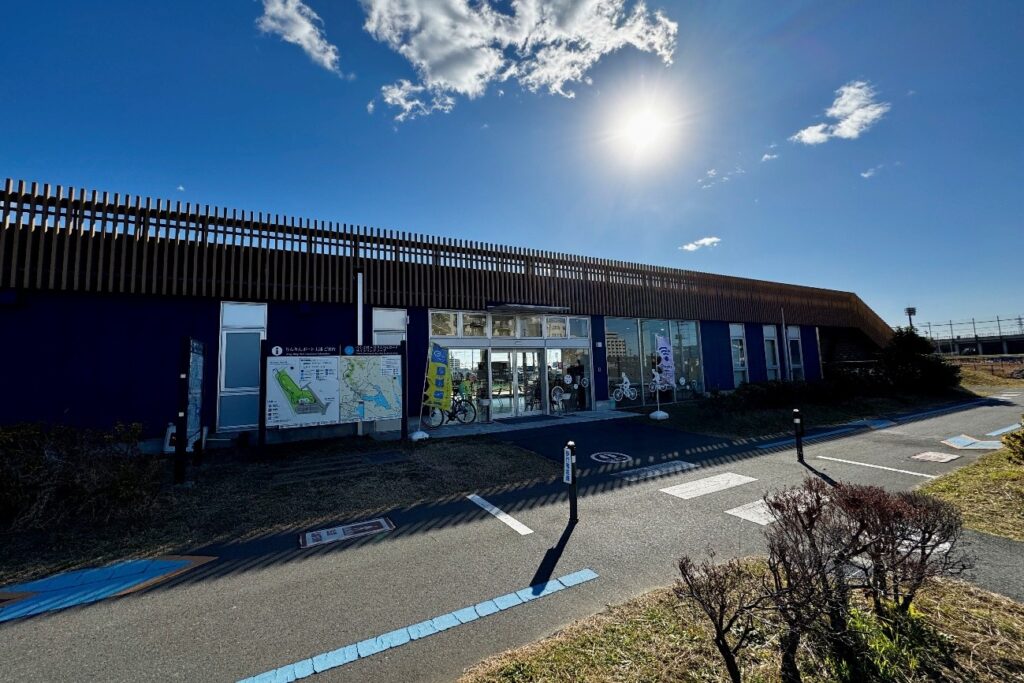
Facilities include:
- Toilets and rest areas
- Showers
- Vending machines with tubes and energy snacks
- Free parking for those arriving by car
For international visitors, this kind of infrastructure removes much of the uncertainty that often comes with riding in a foreign country.
Riding the Kasumigaura Mini Loop
For this ride, we traveled counterclockwise, a popular choice due to wind patterns and road visibility.
Leaving the station, there is a brief urban section—but within minutes, the route opens onto the lakeside. Traffic decreases, the horizon widens, and the rhythm of the ride settles in.
On clear days, Mount Tsukuba rises in the distance. Nearby, a converted railway line—also part of the National Cycle Route network—offers a smooth, traffic-light-free detour toward the mountains.
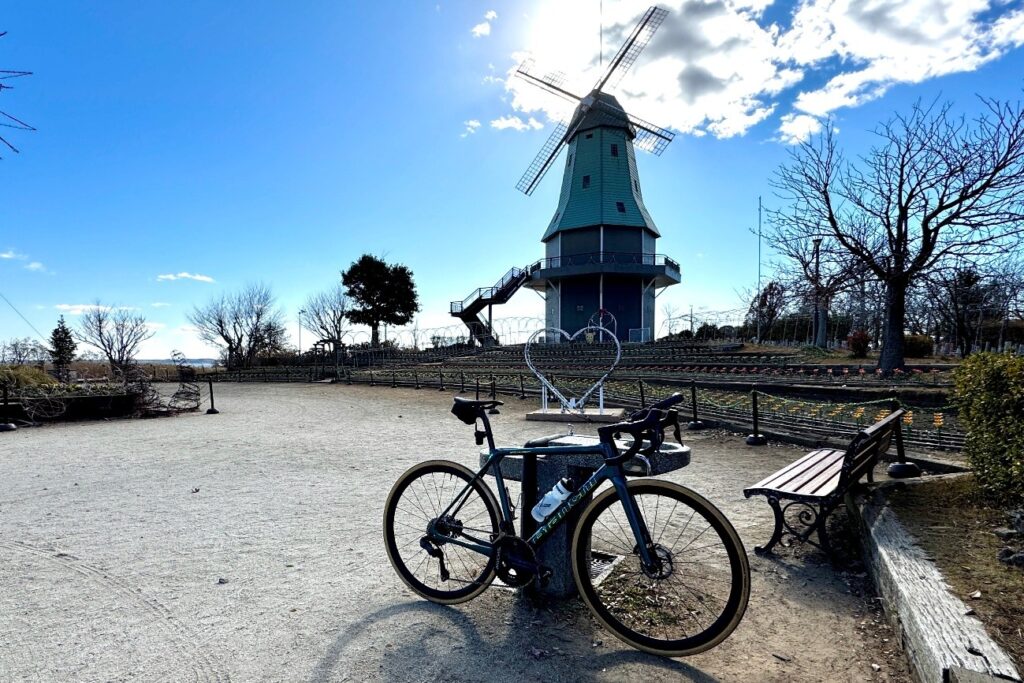
One of the most photogenic spots is Kasumigaura General Park, home to a large Dutch-style windmill. With the lake, sky, and open fields surrounding it, the scene feels unexpectedly European—yet unmistakably Japanese.
Road Conditions and Safety
The route follows the lakeshore for much of the ride, occasionally passing through farmland and rural villages. Directional markings, arrows, and distance indicators are painted on the road, making navigation straightforward even without GPS.
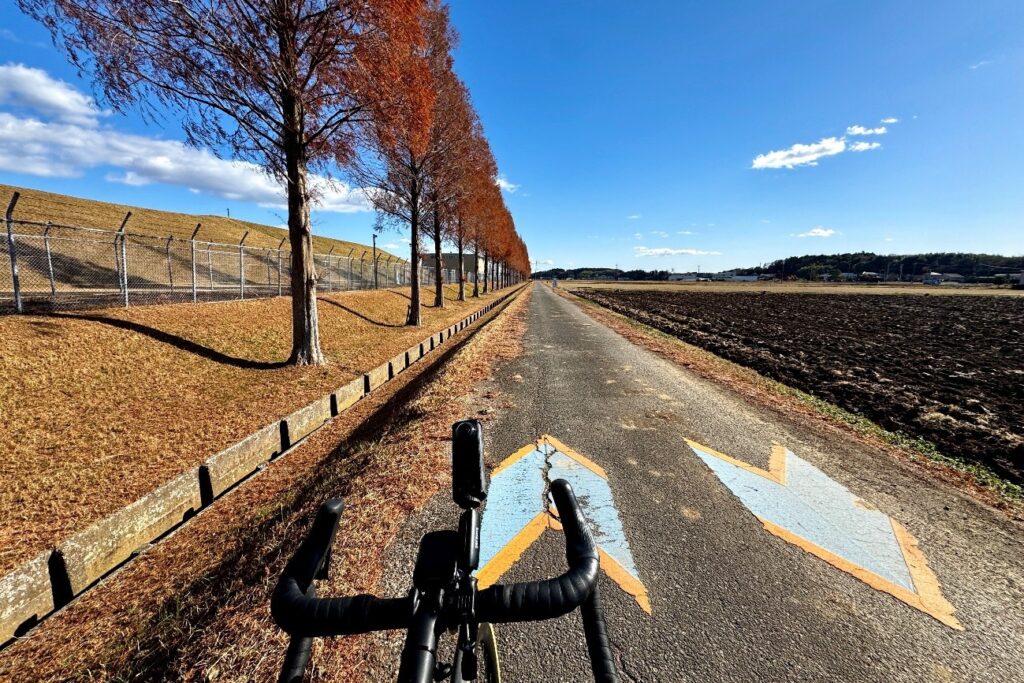
However, cyclists should note:
- Some sections are shared with cars
- Road width can be narrow in places
- Awareness and defensive riding are essential
The route is not entirely car-free, but compared to many rural roads in Japan, it feels calm and predictable.
Local Food Stop: Roadside Station Tamatsukuri
Cycling in Japan is as much about food as it is about distance.
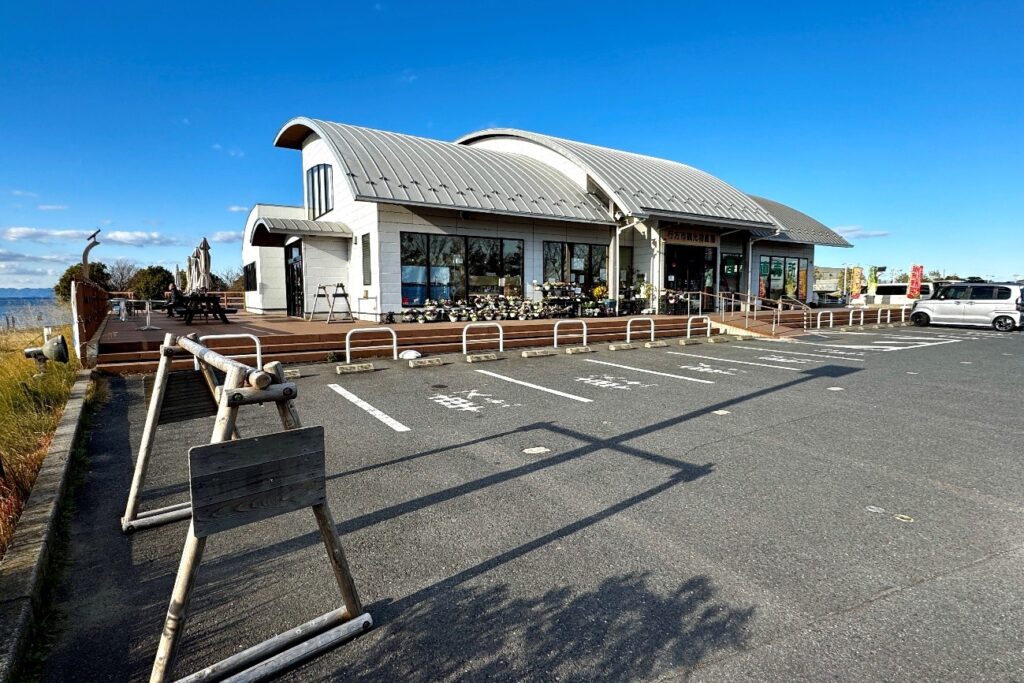
A popular lunch stop is Roadside Station Tamatsukuri in Namegata City. It offers:
- Outdoor terrace seating
- Multiple bike racks
- Local cuisine and regional specialties
One highlight is the “Name Packun” catfish burger, made with catfish from Kasumigaura. Light, clean-tasting, and surprisingly delicious, it’s a perfect mid-ride meal.

Choosing the Mini Loop: Crossing Kasumigaura Bridge
At a key junction, riders can either continue the full loop or cross Kasumigaura Bridge, which shortens the route significantly.
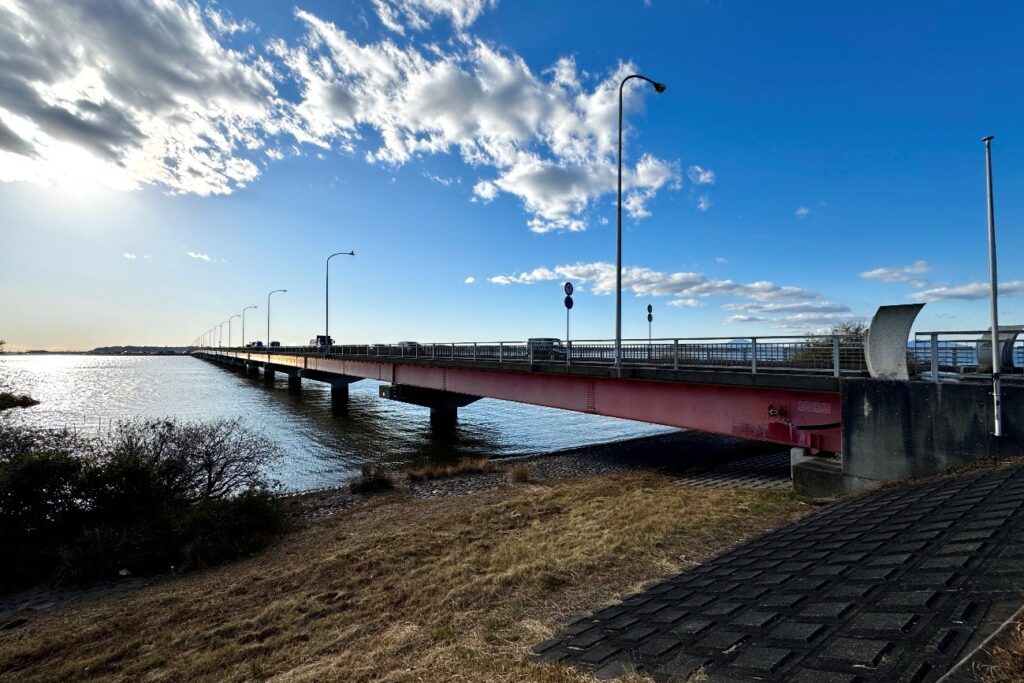
For the Mini Loop, the bridge marks a turning point—reducing distance while maintaining the feeling of “going all the way around.”
Soon after, you reach Aze-no-Eki Kohan, a lakeside community center equipped with bike racks and rental cycles. Local desserts are a highlight here. This time, a roasted sweet potato made from locally grown produce provided an ideal cycling snack—sweet, dense, and energizing.
Wind: Kasumigaura’s Final Challenge
Kasumigaura is famously flat—but flat does not mean easy.
In the afternoon, strong winds often rise across the open lake. On this ride, the final hour was spent battling a steady headwind. There were few traffic lights, allowing for a consistent pace, but progress required patience and steady effort.
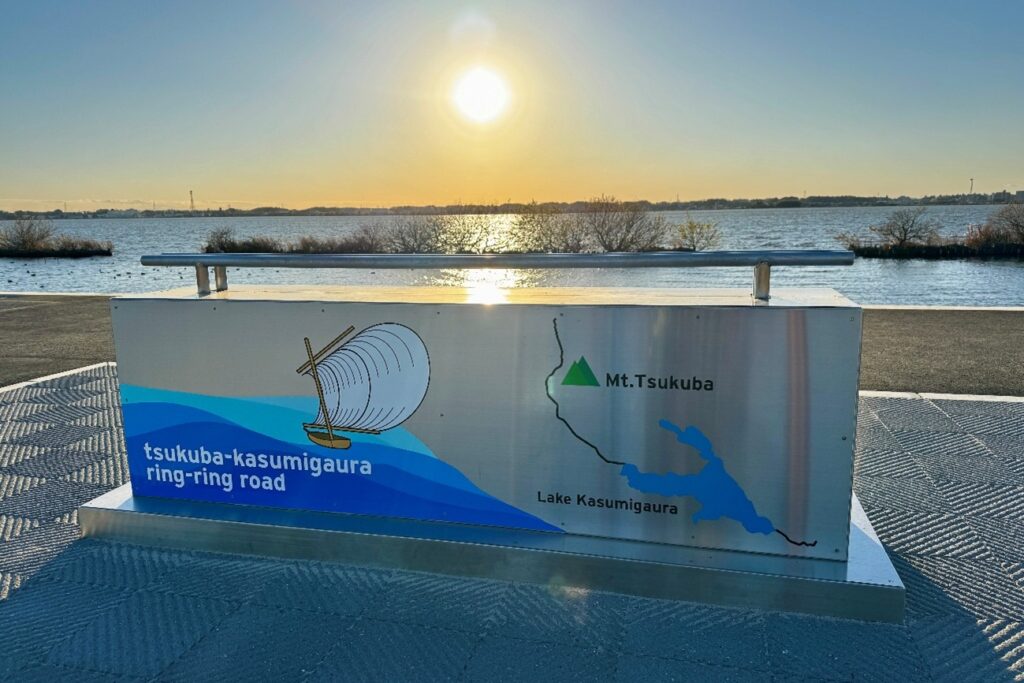
For this reason, early morning starts are highly recommended, especially for visiting riders unfamiliar with local wind patterns.
Is Kasumigaura Mini Loop Right for You?
By the time we returned to Tsuchiura Station, the ride totaled just under 100km, including stops.
This route is ideal if you:
- Want your first 100km ride in Japan
- Prefer flat terrain over mountain climbs
- Are riding with mixed-experience groups
- Are visiting Japan and want a stress-free long ride
- Want reliable facilities and easy logistics
With rentals available directly at the station, it is even possible to ride Kasumigaura without bringing your own bike.
A Perfect First “Loop” in Japan
The Kasumigaura Mini Loop proves that a great cycling experience doesn’t need extreme elevation or technical difficulty. What it offers instead is accessibility, scenery, safety, and cultural discovery—all within easy reach of Tokyo.
For international cyclists looking to experience Japan on two wheels, this is not just an alternative.It may be the ideal starting point.
- HOME
- Japan Cycling Routes / Areas
- Kasumigaura Mini Loop,A Flat, Scenic 100km Ride on One of Japan’s Best National Cycle Routes
- HOME
- Popular Cycling Routes in Japan
- Kasumigaura Mini Loop,A Flat, Scenic 100km Ride on One of Japan’s Best National Cycle Routes
- HOME
- Cycling Routes
- Kasumigaura Mini Loop,A Flat, Scenic 100km Ride on One of Japan’s Best National Cycle Routes