Onsen-Cycling: 4 Hot Spring Towns in Kanto Perfect for Strong-Legged Cyclists

One of the true joys of Japan’s autumn and winter seasons is soaking in an onsen — a natural hot spring. Many of Japan’s most famous onsen towns are located near volcanoes, which also means they’re surrounded by mountain roads perfect for challenging hill climbs. For cyclists visiting Japan, few things compare to conquering a scenic climb and then recovering in a steaming, mineral-rich bath.
Here are four Onsen destinations in the Kanto region where great cycling meets great hot springs.
Ride Through History: Hakone (Kanagawa Prefecture)
- Distance: 18.1km
- Elevation gain: 869 m
Just an hour from Tokyo by Shinkansen, Hakone is one of Japan’s most famous onsen resorts and a favorite weekend escape for cyclists. Starting from Odawara Station, this classic route follows a section of the Old Tokaido Road — the historic highway that once connected Edo (modern-day Tokyo) and Kyoto.
The climb toward Hakone is known as the Hakone Kyukaido (Old Hakone Road), once one of the most difficult stretches for travelers during the Edo period.
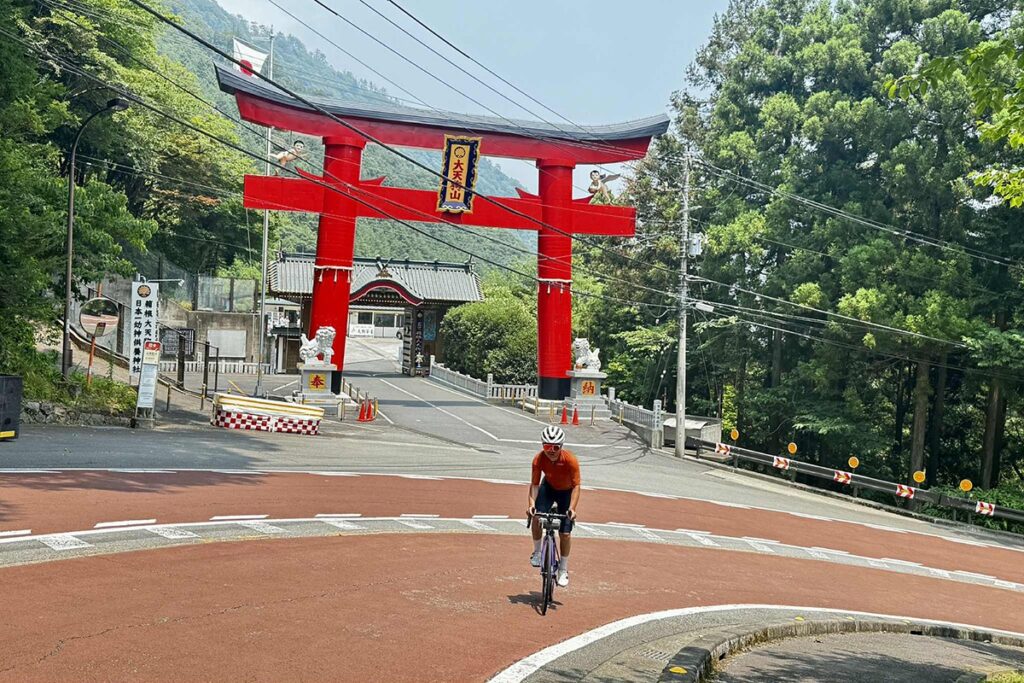
Along the way, you’ll pass preserved sections of the original stone-paved road, hand-laid over 400 years ago (though this cobbled section isn’t suitable for road bikes).
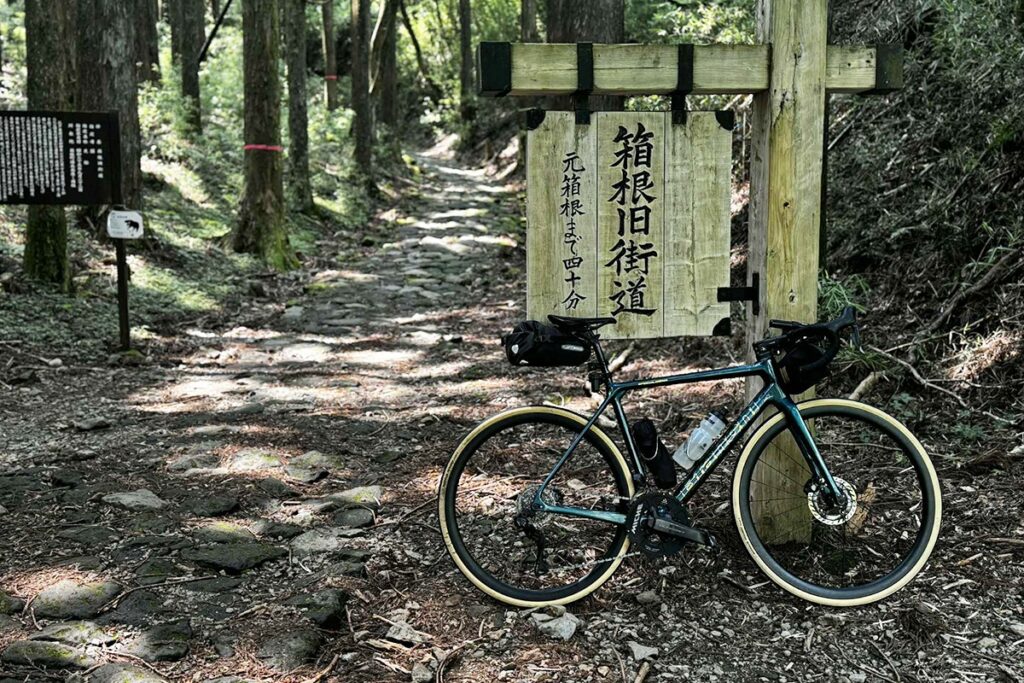
The steady uphill toward Hakone Pass winds through deep forests and offers a rewarding challenge.
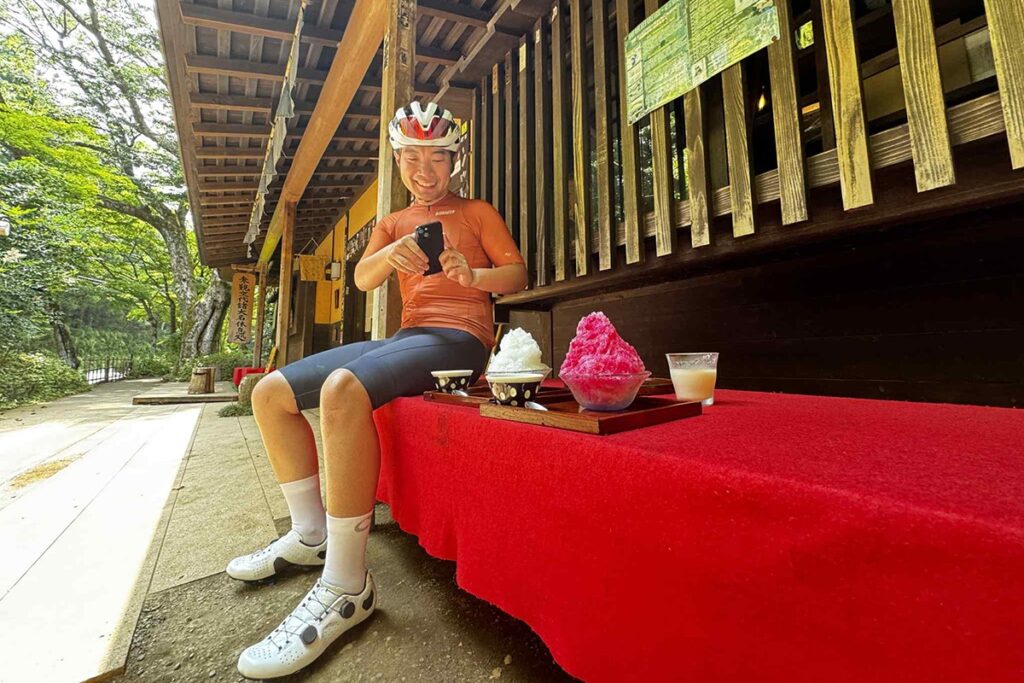
A traditional rest stop awaits at Amazake Chaya, a teahouse that has served travelers since the 17th century. Try a cup of warm amazake (sweet fermented rice drink) and handmade rice cakes before continuing your ascent.
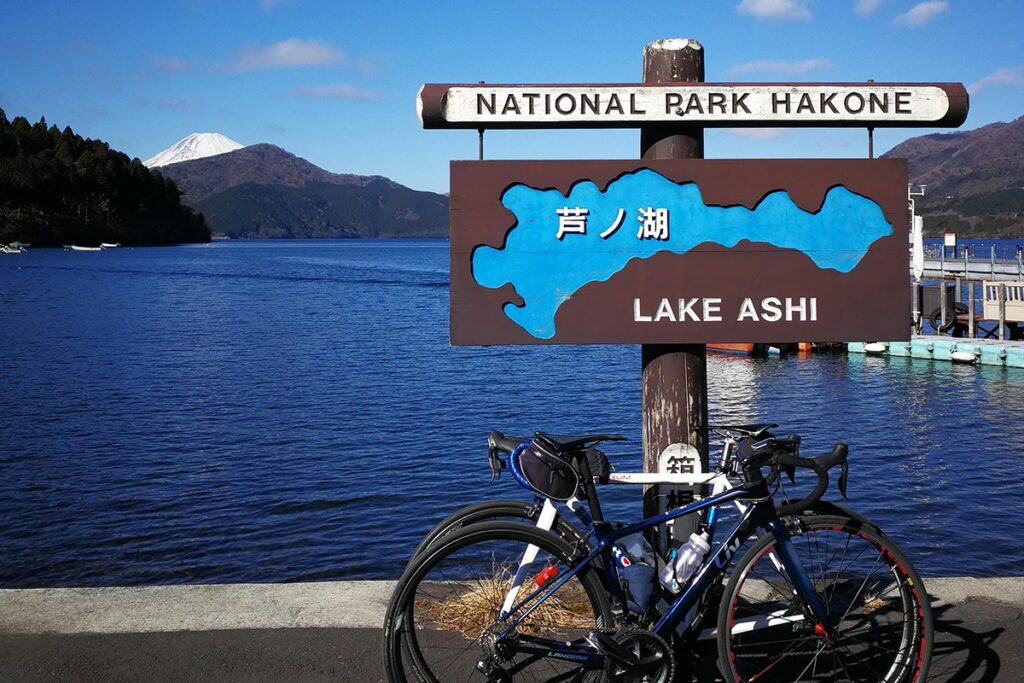
Near the finish, Lake Ashi (Ashinoko) and the reconstructed Hakone Checkpoint bring history to life, showing how travelers were inspected centuries ago.
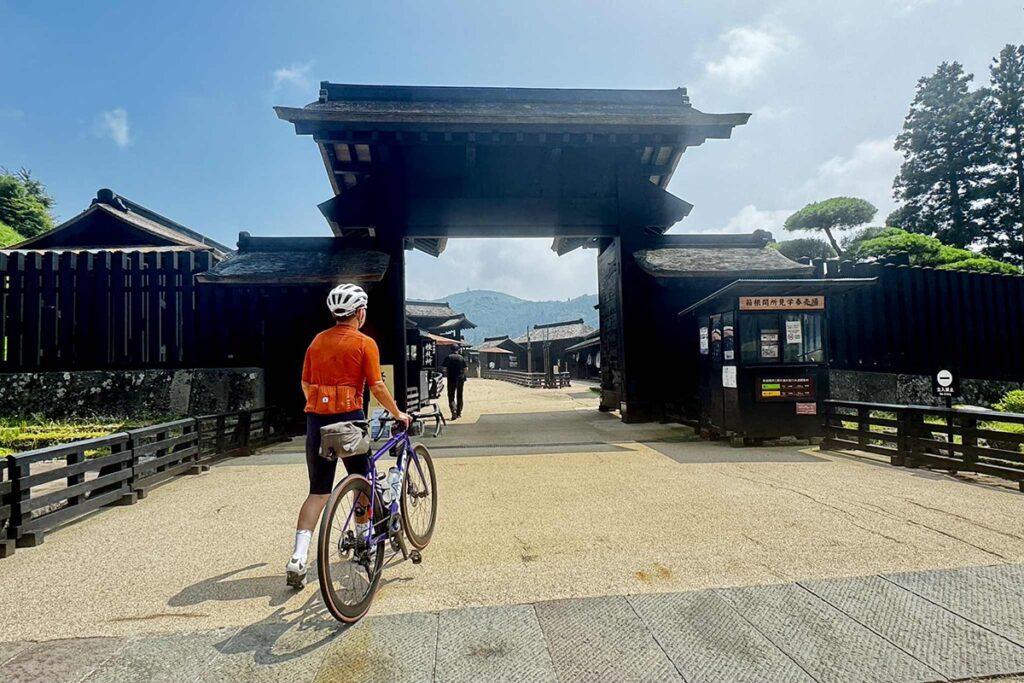
The lakeside area is filled with restaurants and ryokan (Japanese inns), making it ideal for a post-ride soak. On clear days, riders are treated to the ultimate view — Mount Fuji rising beyond Lake Ashi, framed by autumn colors in November.
Big Climbs, Legendary Hot Springs: Kusatsu Onsen (Gunma Prefecture)
- Distance: 51.4 km
- Elevation gain: 1,914 m
Kusatsu Onsen is one of Japan’s top hot springs and a dream destination for cyclists who love high-altitude rides. With the largest natural hot spring output in Japan, Kusatsu is part of Japan’s “Three Great Onsen.” Its sulfuric waters are highly acidic and famous for their healing power — locals say it can cure anything “except a broken heart.”At the center of town is the iconic Yubatake (“hot water field”), where steaming water gushes down wooden channels.
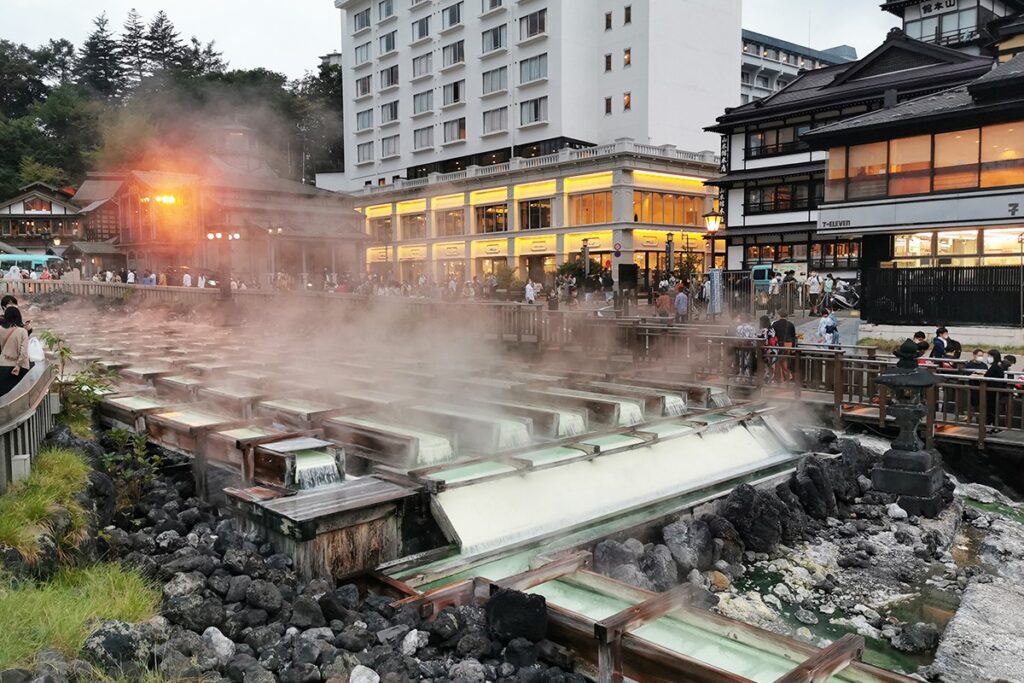
You can also witness or even try Yumomi, a traditional method of cooling the hot spring water by stirring it with long paddles — a ritual passed down for generations.
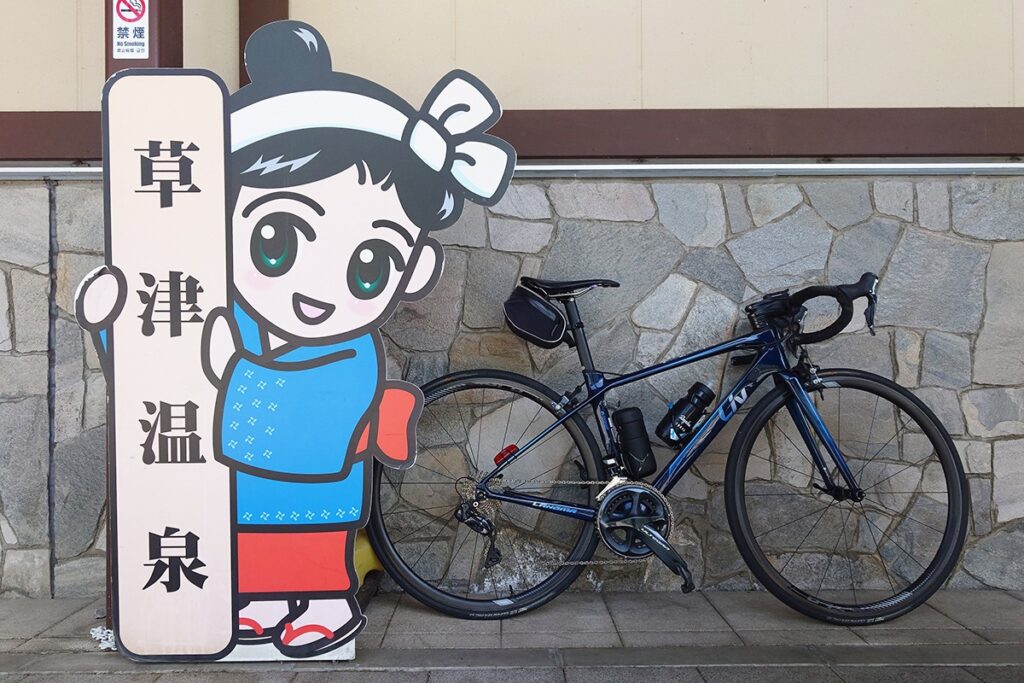
From Kusatsu, you can tackle one of Japan’s most breathtaking mountain rides: the Shiga Kusatsu Kogen Route (National Route 292), Japan’s highest public road. The scenery transitions from volcanic landscapes to alpine forests, and the panoramic views are simply spectacular.
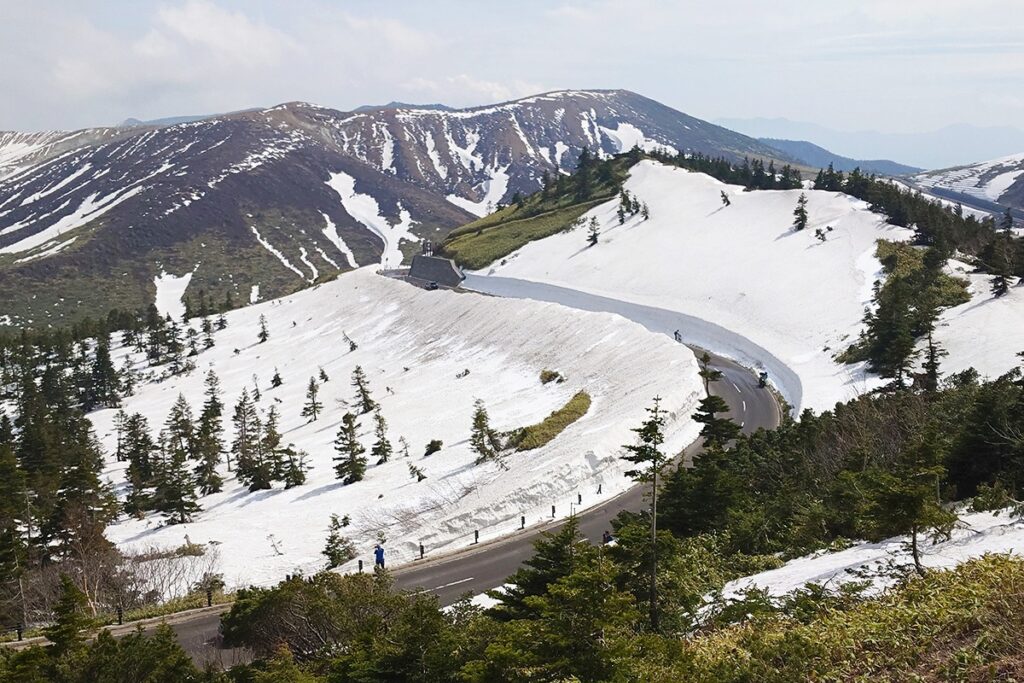
Each spring, when the snowbound road reopens (usually late April), cyclists flock to experience the famous “Snow Corridor,” where towering walls of snow flank both sides of the road. Note that sections near Mt. Shirane may occasionally close due to volcanic activity, so always check the latest updates before heading out.
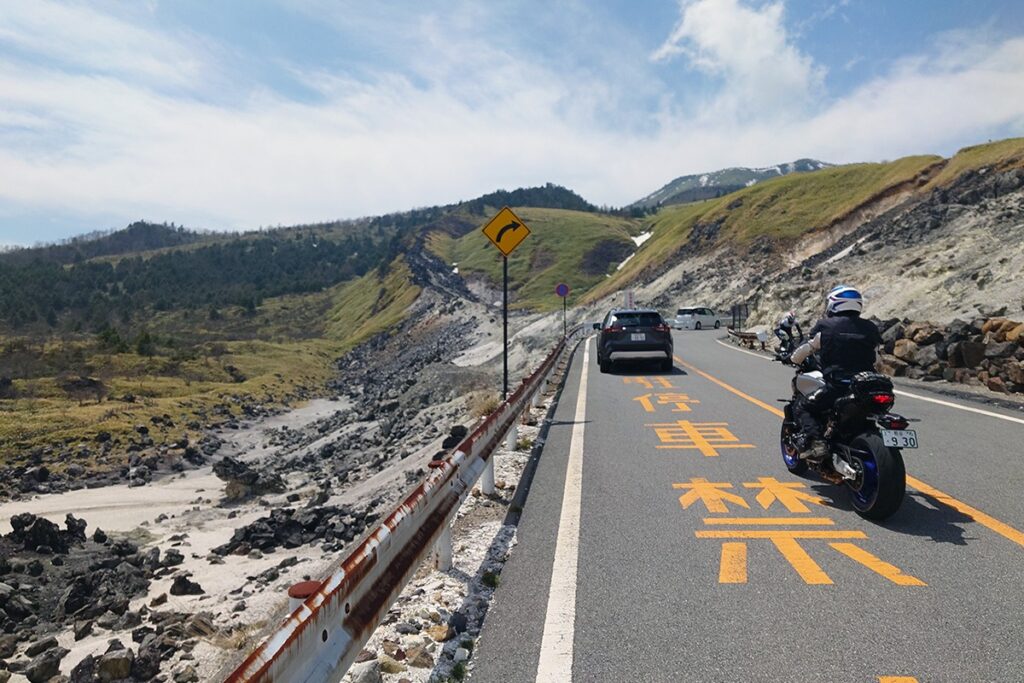
After conquering Japan’s highest road, reward yourself with a dip in Kusatsu’s soothing hot springs — the perfect combination of epic riding and deep relaxation. Autumn leaves peak ere from early to late October, painting the mountains in vivid color.
The Perfect Base for Climbers: Ikaho Onsen (Gunma Prefecture)
Another of Gunma’s beloved hot spring towns, Ikaho Onsen is known for its 365-step stone stairway street, lined with ryokan, bathhouses, and nostalgic shops. But for cyclists, Ikaho is also a strategic base camp, surrounded by some of the region’s best hill climbs.
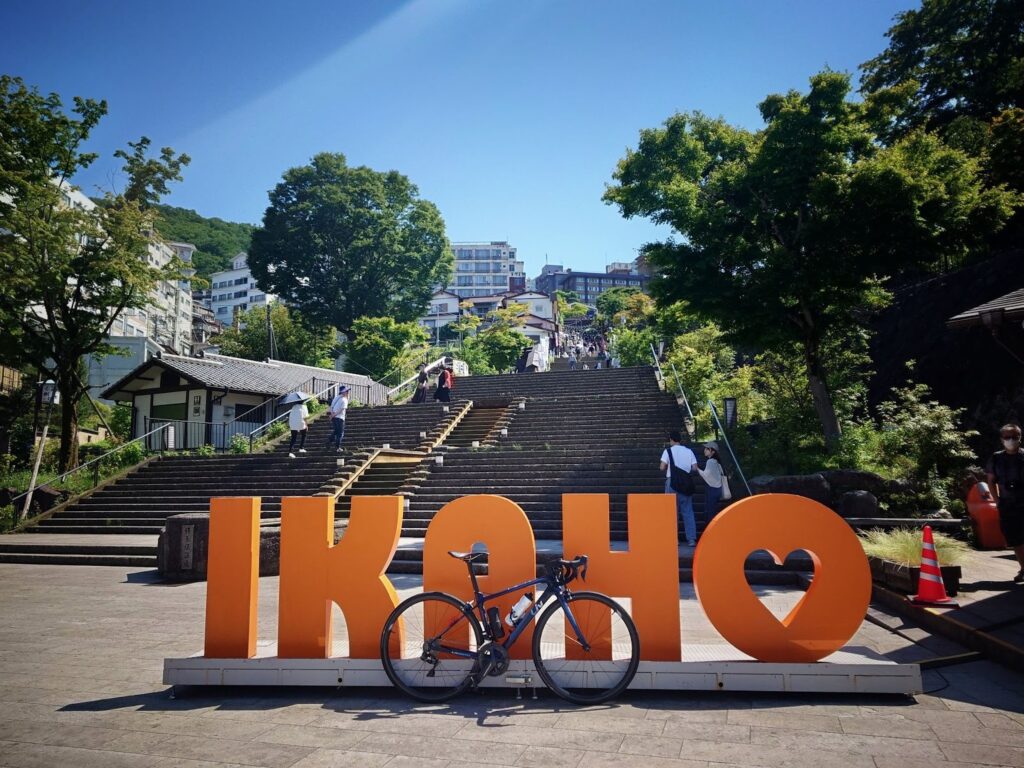
Haruna Mountain (Mount Haruna)
- Distance: 16.6 km
- Elevation gain: 943 m
From Ikaho, the route ascends toward Lake Haruna, a crater lake nestled around 1,000 meters above sea level. The climb features moderate gradients suitable for intermediate to advanced riders. Once at the lake, you can enjoy a flat 5.4 km loop with stunning views of Mount Haruna-Fuji, a smaller, perfectly shaped volcanic cone. Stop by Haruna Shrine or the lake’s observation deck for great photo spots.
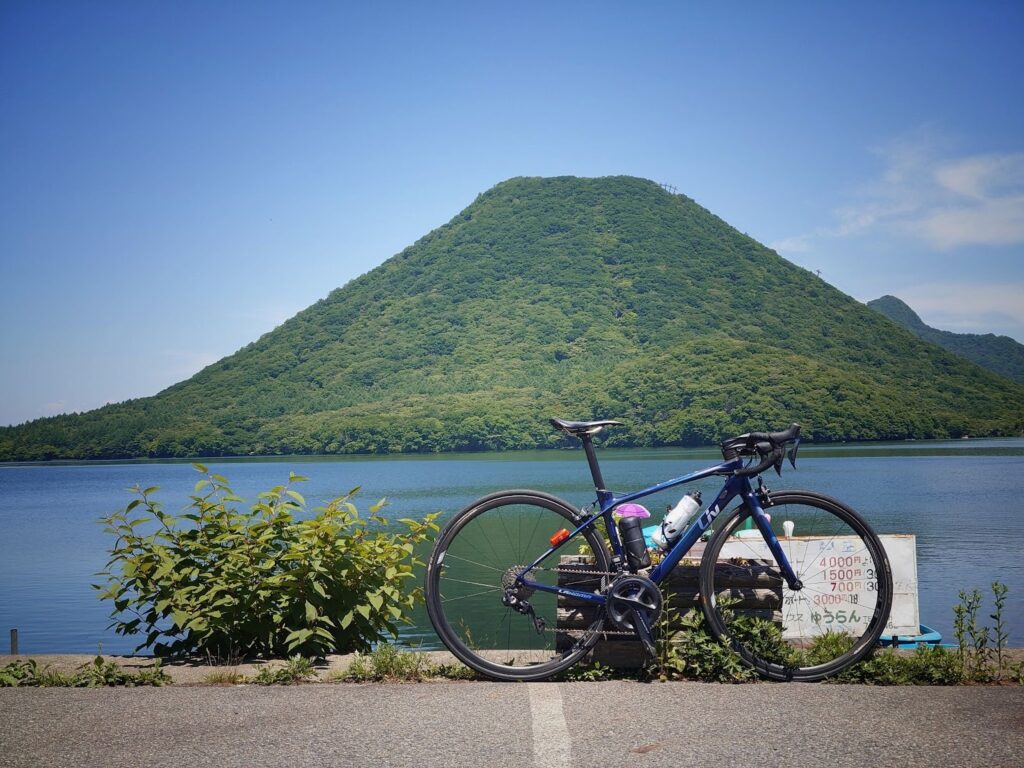
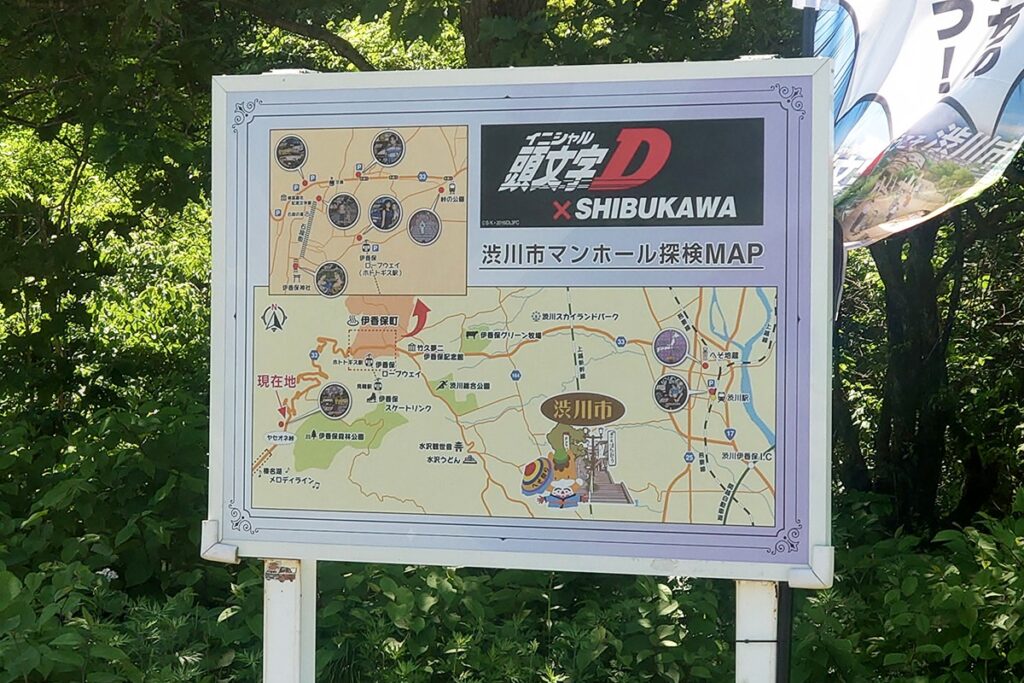
Descending from Haruna offers smooth, winding roads — a thrill for those who love technical cornering. Fans of Japanese pop culture might recognize these roads as the setting for the iconic car-racing manga and anime “Initial D.”
Akagi Mountain (Mount Akagi)
- Distance: 18.7 km
- Elevation gain: 1,261 m
For a more serious challenge, head toward Mount Akagi, another of the “Three Famous Mountains of Jomo.”
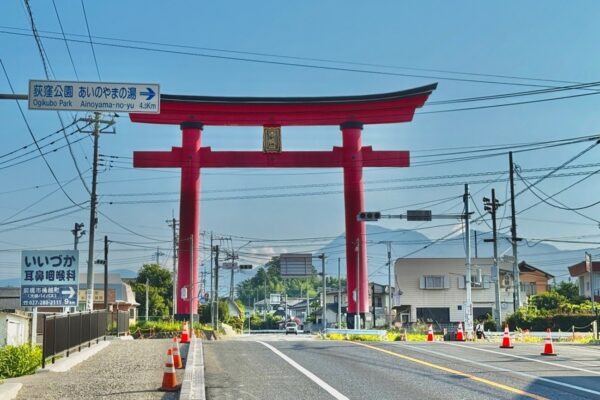
It’s home to the annual Mt. Akagi Hill Climb Race, making it one of Japan’s sacred mountains for cyclists. The long, steep ascent rewards riders with sweeping views of the Kanto Plain from the summit.
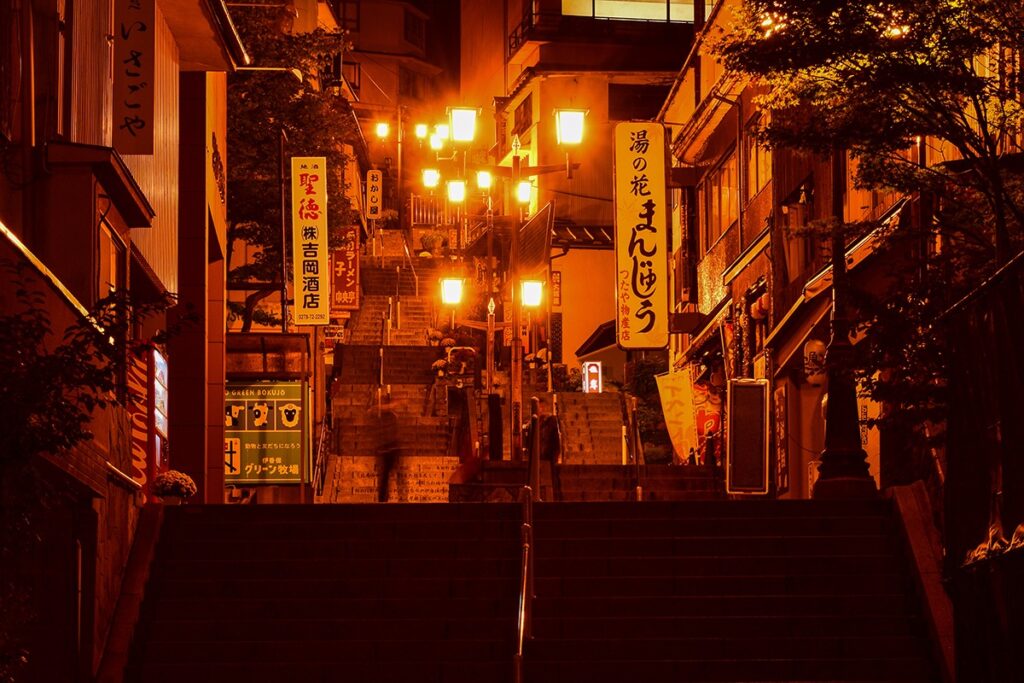
Back in Ikaho, ease your muscles in one of its two famous hot spring types. The “Golden Hot Spring” (Kogane no Yu), rich in iron, warms the body deeply and promotes blood circulation — ideal for tired legs. The “Silver Hot Spring” (Shirogane no Yu) is clear and gentle on the skin, perfect for relaxation and recovery after a long day of climbing.
Fuji Views and Hot Springs Galore: Izu Peninsula (Shizuoka Prefecture)
The Izu Peninsula, located just southwest of Tokyo, is a paradise for cyclists who want to combine mountain climbs, ocean views, and relaxing hot springs. Dotted with countless onsen towns, each area in Izu has its own mineral composition and healing effects — from fatigue recovery to smooth, radiant skin. Add in fresh local seafood and scenic coastal roads, and it’s no wonder Izu is one of Japan’s most beloved onsen destinations.
- Course profile
- MAP
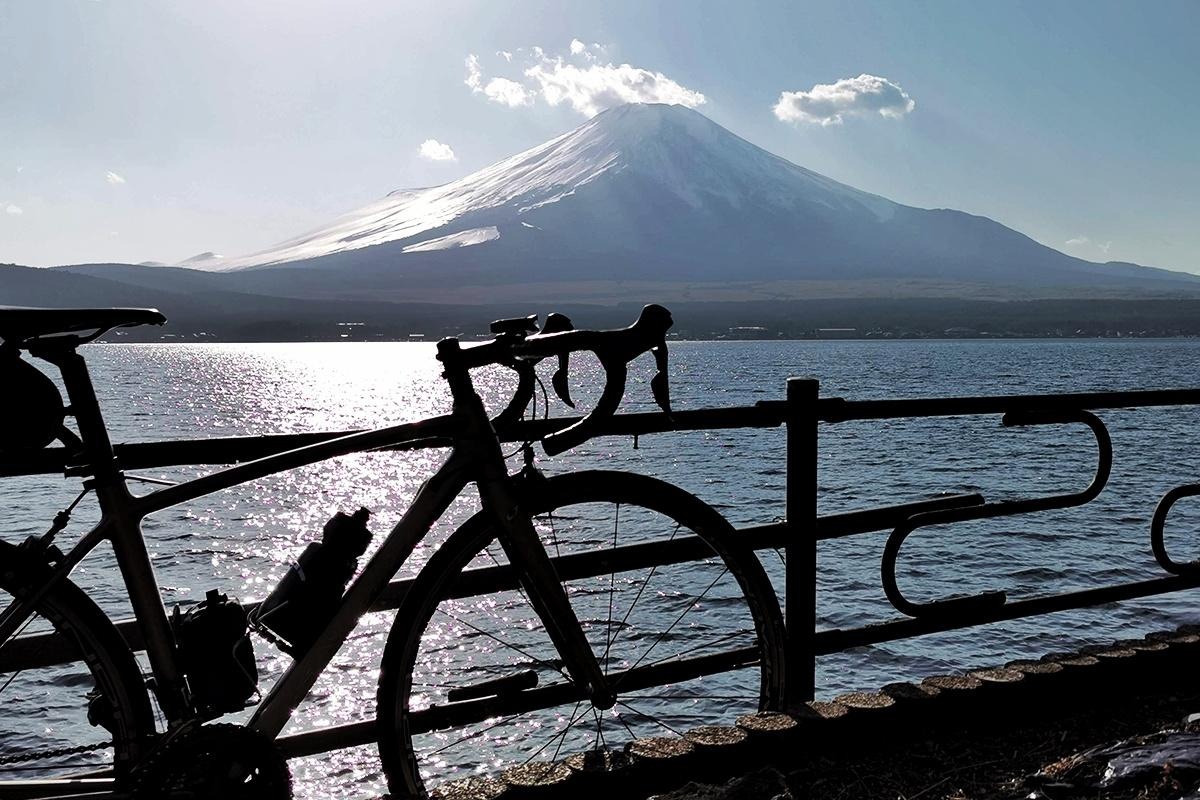
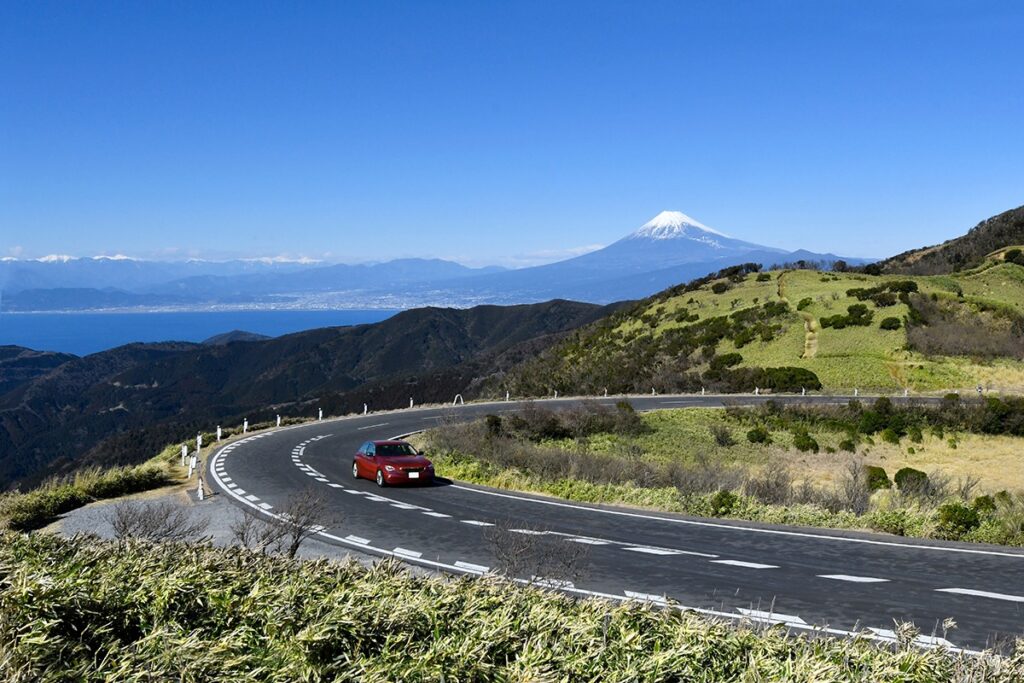
The highlight of cycling in Izu is the Nishi-Izu Skyline, a spectacular ridge road stretching between 700 and 900 meters above sea level. From this panoramic route, riders can enjoy breathtaking views of both Mount Fuji and the deep-blue Suruga Bay. With roughly 1,000 meters of elevation gain, this route is often called “a must-ride for cyclists in Japan.” The sweeping Fuji view at the summit feels like a hard-earned reward for your climb.
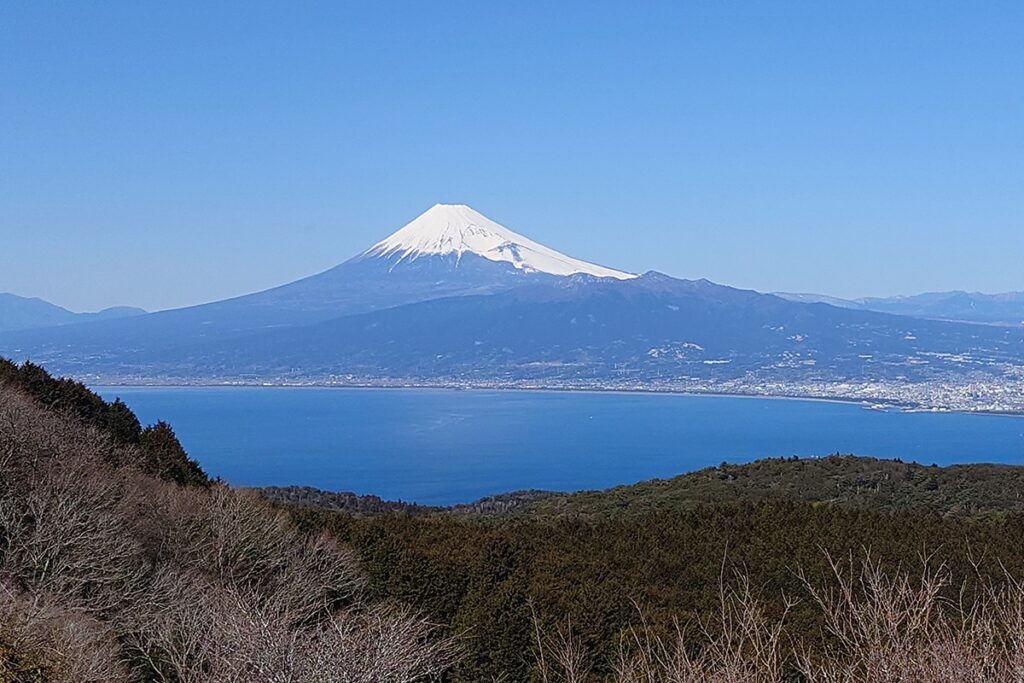
After descending from the ridge, you can continue your ride along the coastline — a mostly flat stretch that offers magnificent views of Mount Fuji rising across the water. Each viewpoint reveals a new angle of the mountain, but the clearest vistas come on crisp winter mornings when the air is dry and the sky is perfectly blue. Seeing Mount Fuji up close on such a day feels like striking gold — a fleeting moment of pure magic for any cyclist.
A convenient base for exploring is Central Izu, home to historic hot spring towns like Shuzenji Onsen and Izu Nagaoka Onsen. Both areas have long been popular among travelers for their relaxing baths, traditional architecture, and easy access to nearby mountain routes.
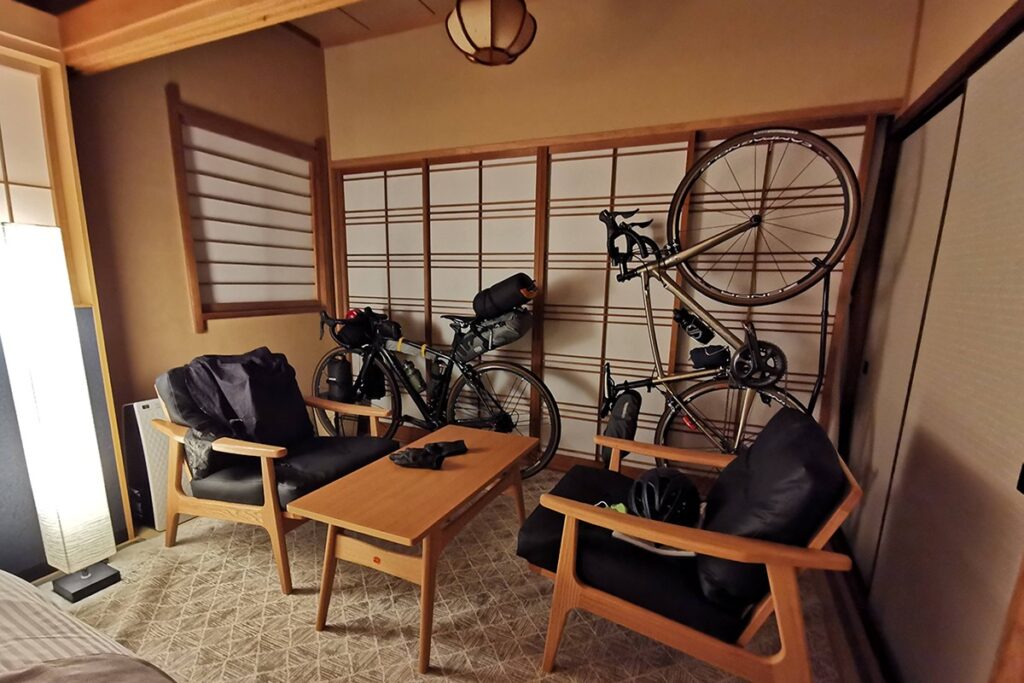
In Izu Nagaoka, you’ll even find a cyclist-friendly ryokan (traditional Japanese inn) called “KONA STAY” — a rare gem in Japan. The building maintains traditional Japanese aesthetics while offering modern amenities tailored for cyclists: secure bike storage, maintenance tools, laundry facilities, and of course, its own natural hot spring bath. It’s the perfect place to rest, refuel, and plan your next ride.]
Tips for Enjoying Japan’s Hot Springs
Before you slip into Japan’s soothing mineral baths, it’s important to know a few onsen etiquette basics.
Bathing suits or clothing are not permitted in traditional hot springs. Always wash your body thoroughly before entering the bath, and never dip your towel into the hot water.
Many public baths and onsen facilities still have tattoo restrictions, though policies vary. Check the facility’s website in advance if you have tattoos — some locations offer private baths or “tattoo-friendly” time slots.
If you’re shy about full-body bathing, look for a foot bath (ashiyu) instead. Found in many onsen towns (often for free), these shallow pools allow you to soak only your feet — the perfect way to relax and recover your legs after a long day of cycling.
- HOME
- Japan Cycling Routes / Areas
- Onsen-Cycling: 4 Hot Spring Towns in Kanto Perfect for Strong-Legged Cyclists
- HOME
- Lodging & Rest Spots for Cyclists
- Onsen-Cycling: 4 Hot Spring Towns in Kanto Perfect for Strong-Legged Cyclists