Tokyo’s Cycling Oasis: Where Local Riders Gather
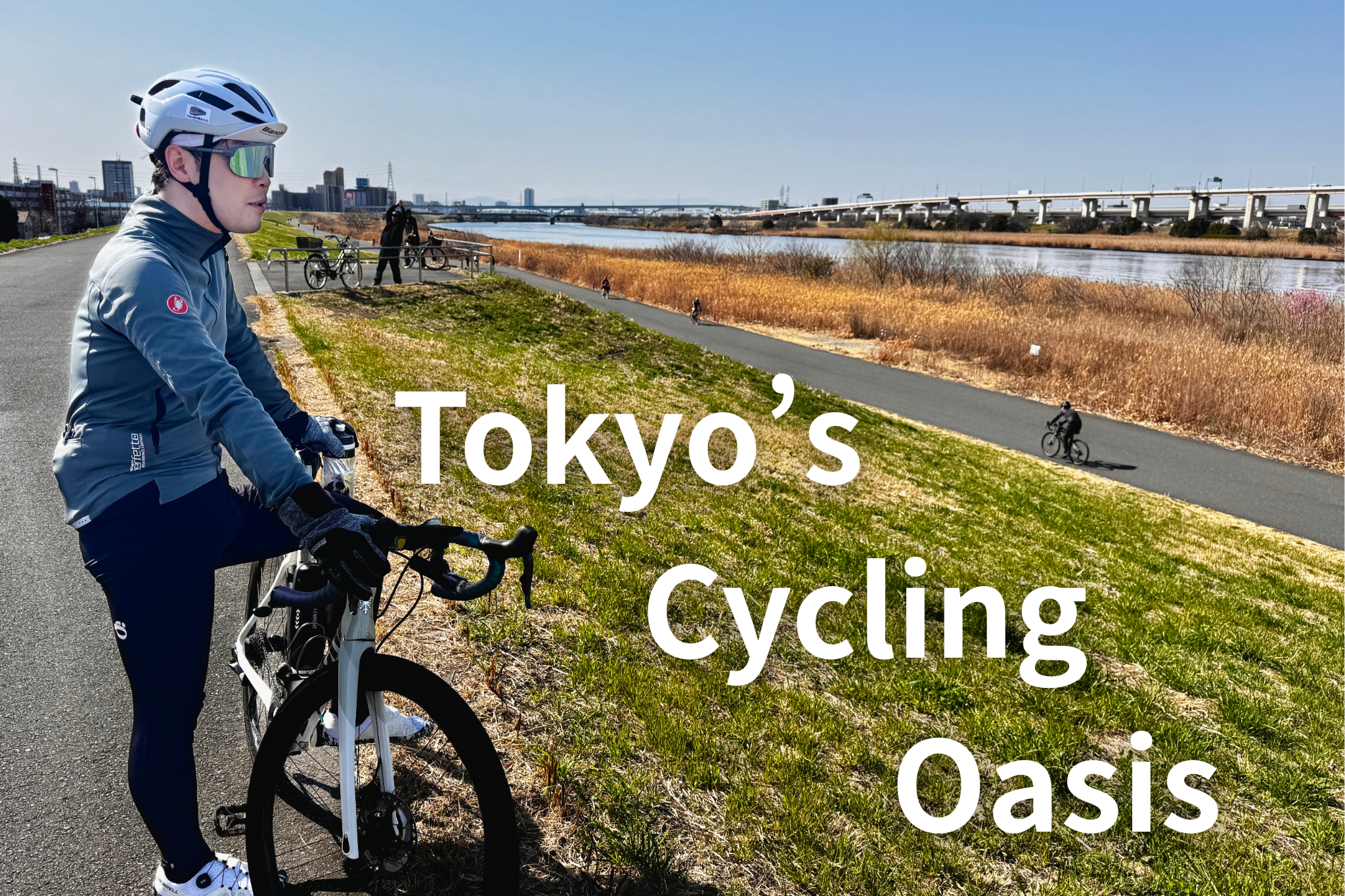
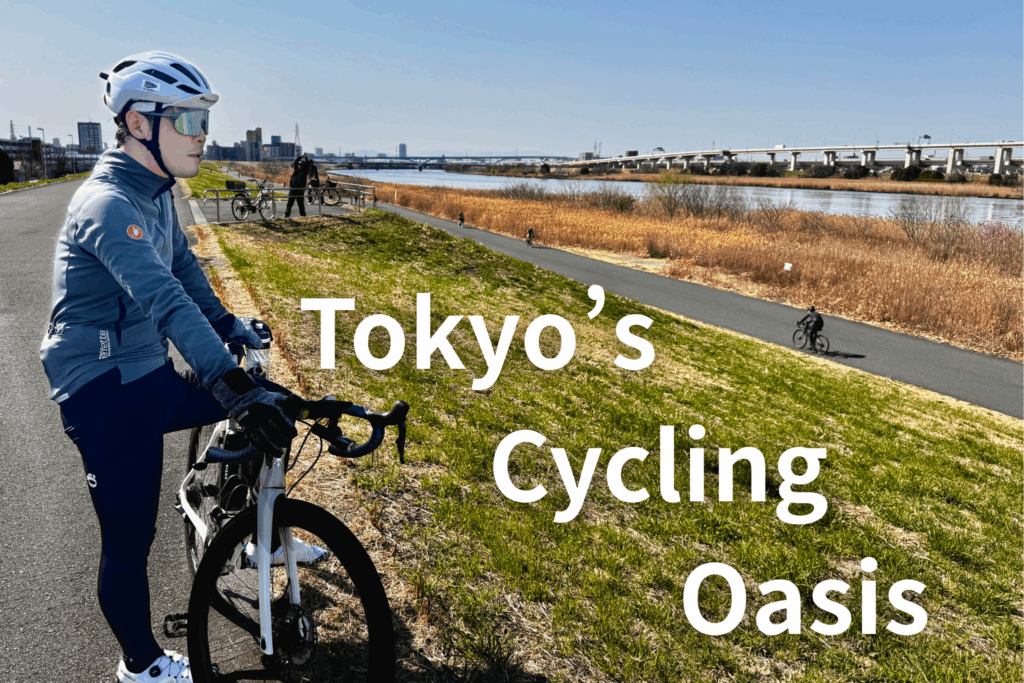
Can you believe that in a city as dense as Tokyo, there’s a place where you can ride for over 80 kilometers without stopping for a single traffic light? Just as your own city may be defined by its great rivers, Tokyo has the Arakawa—a massive waterway cutting from north to south. Its riverside cycling road is a true “oasis” for local riders. We’re taking you off the beaten path to explore a local Tokyo cycling route you won’t find in any guidebook.
Navigating by the Gates: The Landmarks of the River
When riding the Arakawa, we don’t rely on street names or typical GPS markers. Instead, the massive Sluice Gates (Suimon) serve as our primary landmarks. Embarking on a “Gate Tour” is perhaps the best way to experience the scale and history of this waterway.
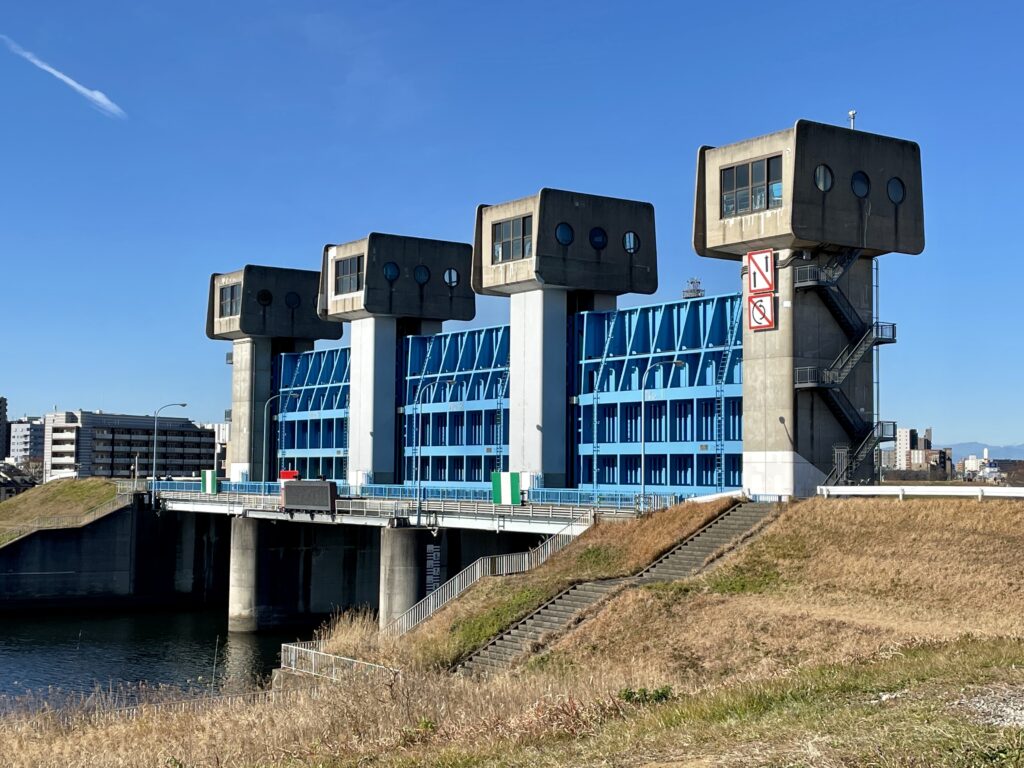
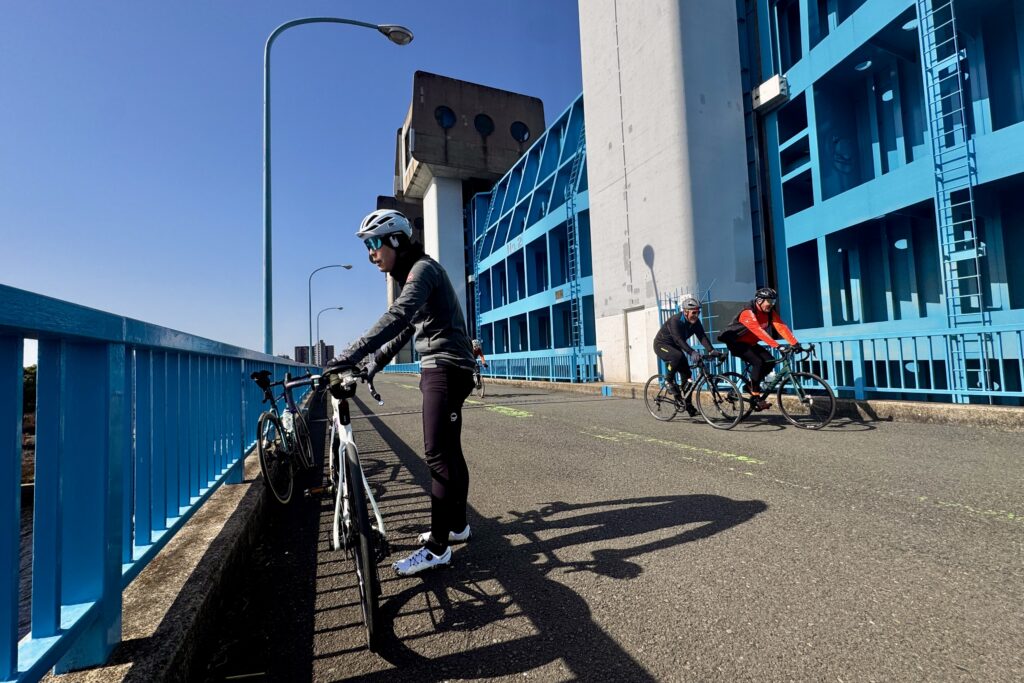
The New Iwabuchi Sluice Gate, famously known as the “Blue Gate” (Ao-Suimon) in Kita Ward, is the ultimate spiritual home for Arakawa cyclists. Even in 2026, it remains the river’s premier social hub. On any given weekend, you will find dozens of riders taking a break here, admiring each other’s high-end road bikes, and chatting by the vending machines. Just a few steps away stands the historical “Red Gate,” a preserved monument that offers a beautiful, quiet contrast to the modern energy of the Blue Gate.
If you are accessing the river from central areas like Asakusa or Ueno, the Horikiri (Sumida Sluice Gate) will likely be your gateway. From here, you can ride with the majestic Tokyo Skytree at your back. As you head upstream, the scenery shifts from urban skylines to the lush greenery of the Asaka Sluice Gate in Saitama. For those heading toward the bay, the Arakawa Lock Gate near the river mouth offers a fascinating look at Japanese civil engineering, where you can watch boats transition between different water levels.
Destinations Worth the Pedal: Gelato and Coffee
The Arakawa experience isn’t just about the miles; it’s about the rewards found along the way. Three spots, in particular, have become essential “pilgrimage” sites for those in the know.
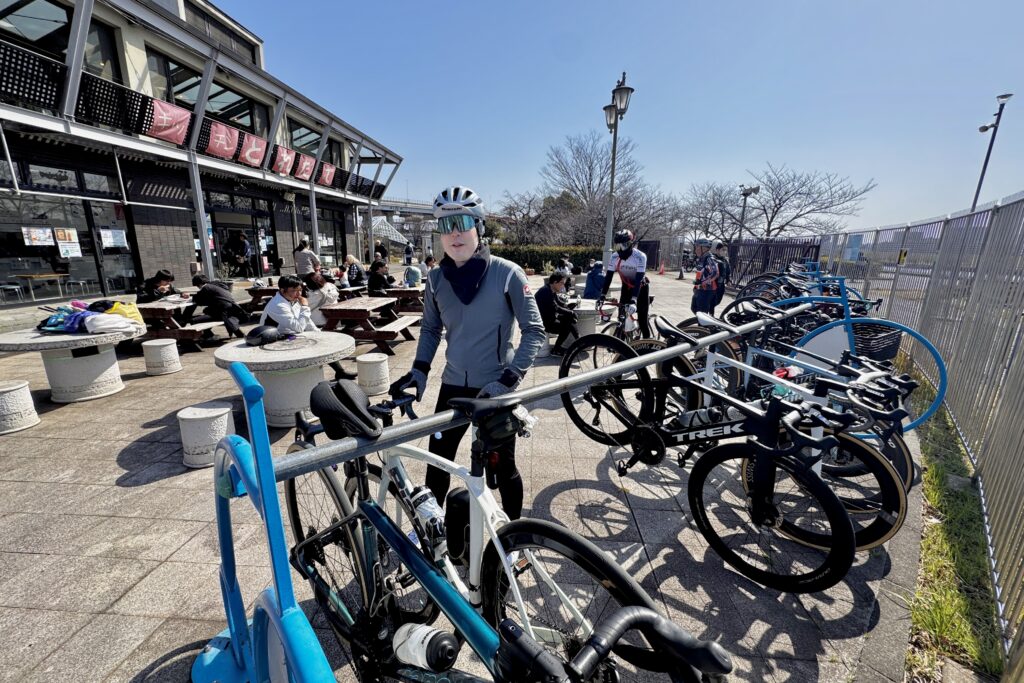
Many riders choose Kitchen Toretate as their first base of operations. Located within the Adachi City Urban Agricultural Park, this rest-house is one of the few places with direct access from the levee. It offers meals made with locally grown vegetables and serves as the perfect “basecamp” to fuel up before heading further north.
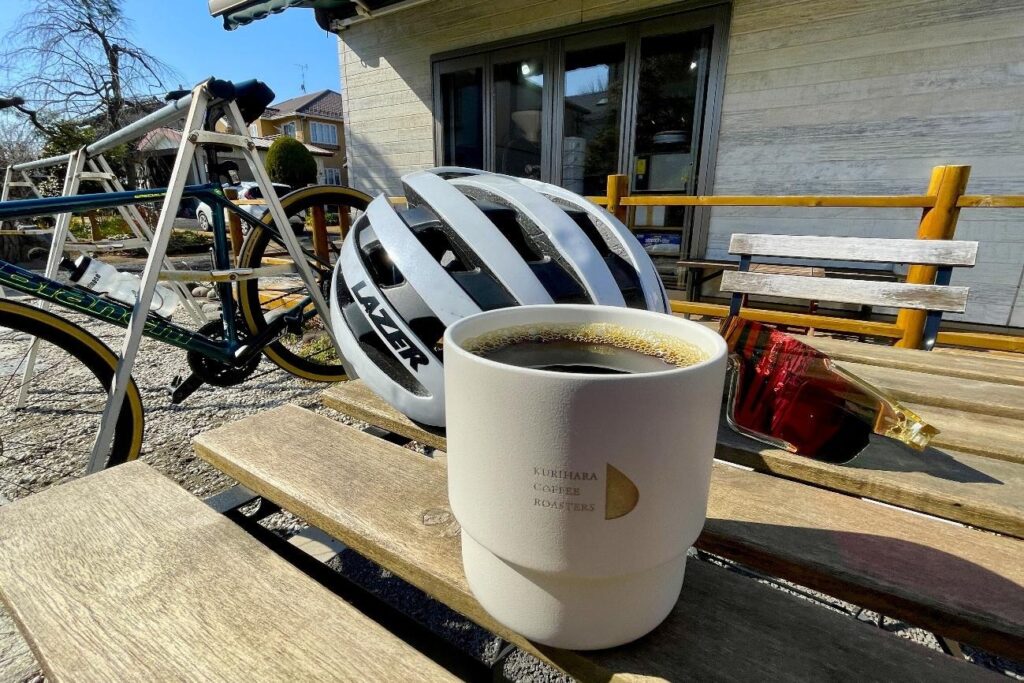
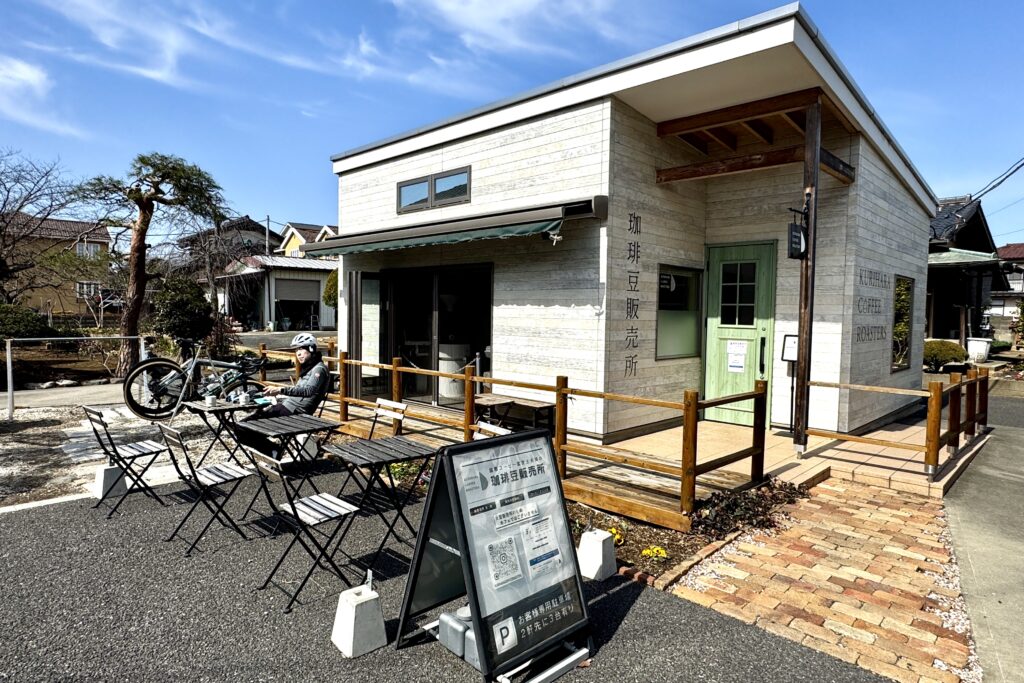
As the path enters the quieter stretches of Saitama, you’ll find the cyclist’s oasis: KURIHARA COFFEE ROASTERS. While you can enjoy a fresh brew on-site, please note that it is primarily a dedicated roastery specializing in carefully selected beans rather than a traditional cafe. It is one of the few places where you can walk in with your cycling cleats and be greeted by the aroma of high-quality, house-roasted coffee—a true moment of zen for any rider.
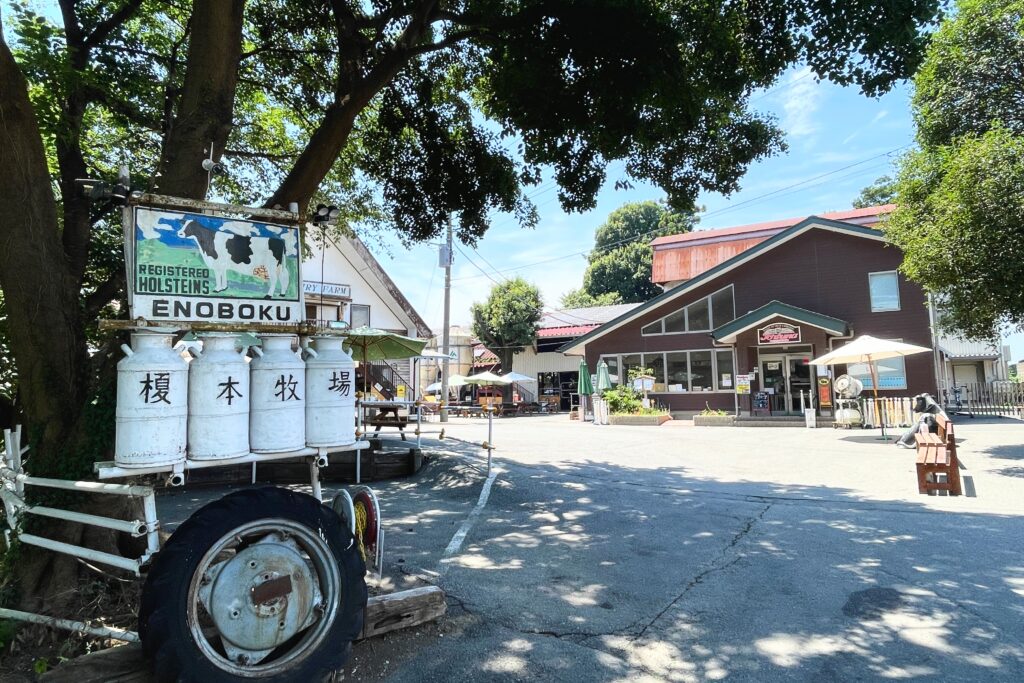
Finally, for many, the “Goal” of an Arakawa ride is Enomoto Dairy Farm in Ageo City. Roughly 40km from central Tokyo (making for a perfect 80km round trip), the farm’s fresh milk gelato has become a rite of passage. Tasting that cold, creamy reward while watching the farm animals and looking out over the rural landscape is the ultimate way to forget the hustle and bustle of Tokyo.

The Spirit of Coexistence: 2026 Safety Standards
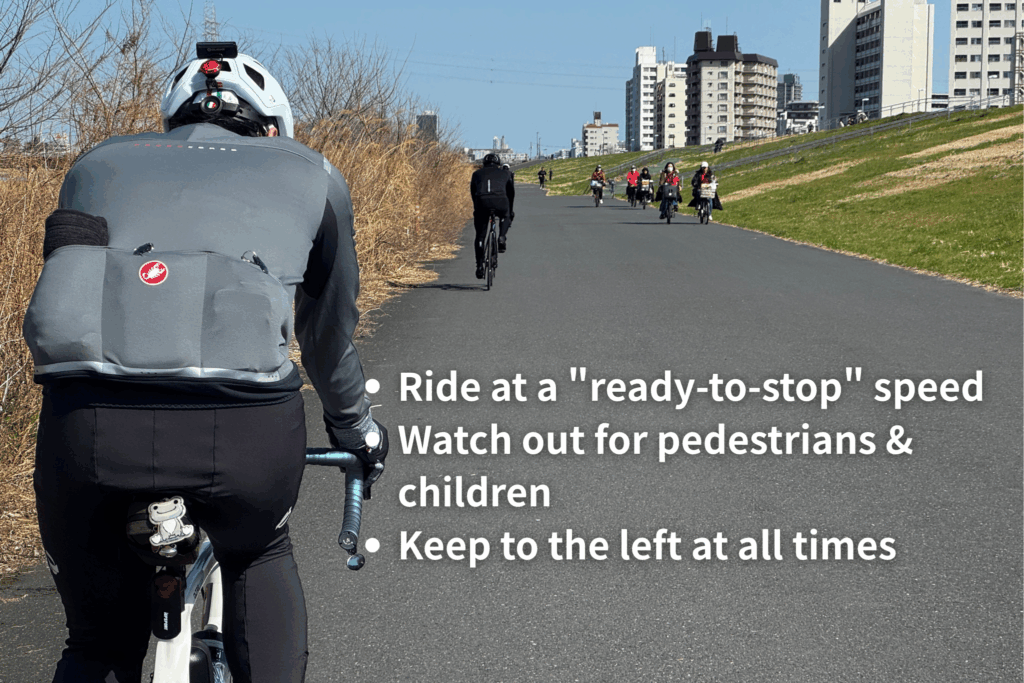
While the Arakawa offers a sense of freedom, it is vital to remember that it is a Shared Space. On weekends, the riverbanks come alive with children playing baseball, families on picnics, and local runners. As cyclists, we are guests in their backyard.
With the full implementation of the “Blue Ticket” (Traffic Violation Enforcement) system in 2026, cycling etiquette in Japan is more important than ever. International visitors are not exempt from these rules. Reckless riding, using a phone while cycling, or failing to stop at designated points can now result in immediate fines.
The current standard for a “sophisticated cyclist” on the Arakawa is to maintain a speed under 20km/h in crowded areas, and as low as 10-15km/h when passing pedestrians or children. You must always be “ready to stop.” Additionally, be prepared for the notorious “Arakawa Toge” (Arakawa Pass)—a fierce headwind that can make a flat path feel like an Alpine climb. Stay patient, stay safe, and respect the locals.
Conclusion
Under the vast sky, passing fellow riders with a nod or a wave, the Arakawa River offers the most authentic glimpse into the daily life of Japanese cycling. By connecting the gates, seeking out gourmet rewards, and prioritizing the safety of the community, your ride on the Arakawa will be one of the highlights of your time in Japan.
Facilities & Spot Information
Here are the details for the major spots mentioned in this guide to help you plan your ride:
- New Iwabuchi Sluice Gate (Blue Gate)
- Description: The main hub for cyclists. Equipped with toilets, vending machines, and benches.
- Address: 5-41 Shimo, Kita-ku, Tokyo
- Kitchen Toretate (Adachi City Urban Agricultural Park)
- Description: A rest-house offering farm-to-table meals and light snacks. Cycle racks available.
- Address: 2-44-1 Shikahama, Adachi-ku, Tokyo
- KURIHARA COFFEE ROASTERS
- Description: A highly cyclist-friendly specialty coffee roastery.
- Address: 1168-3 Shimo-okubo, Sakura-ku, Saitama-shi, Saitama
- Enomoto Dairy Farm
- Description: Famous for its fresh gelato. The standard turnaround point for long rides.
- Address: 736-1 Azeyoshi, Ageo-shi, Saitama
- Arakawa Lock Gate
- Description: A unique lock gate (閘門) connecting the Arakawa and Kyu-Nakagawa rivers. A landmark near the bay.
- Address: 1-1 Komatsugawa, Edogawa-ku, Tokyo
- HOME
- Basics & Preparation for Cycling in Japan
- Tokyo’s Cycling Oasis: Where Local Riders Gather